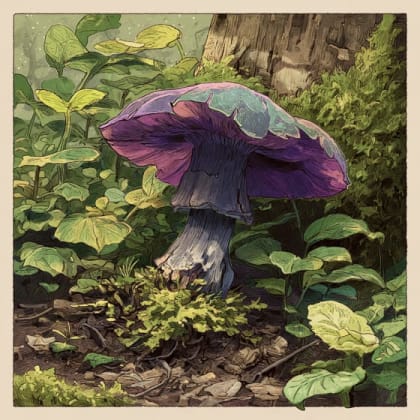
Toothed Jelly Fungus
pseudohydnum gelatinosum
The Toothed Jelly Fungus looks like little jelly blobs with tiny teeth! It's a fun and squishy fungus that grows on decaying wood in the forest.
Hábitat: It lives in damp forests, often found growing on decaying wood.
The Toothed Jelly Fungus is a translucent, whitish to brownish fungus with a distinctive spatulate or tongue-like shape. Its underside is covered in soft, gelatinous, tooth-like spines that are clear to white, making it look unlike any other forest floor fungus.
Categoría
HongosRareza
Common
Peligro
0/5 · Sin peligro conocido
Snaps
¡Sé la primera persona en hacer un snap!
Even when dried out, a sprinkle of rain can make it squishy again!
It's sometimes called "Cat's Tongue" because of its bumpy underside!
Its jelly-like teeth are unique among fungi, feeling soft and bouncy.
This fungus often grows on dead conifer trees, cleaning up the forest floor.
Toothed Jelly Fungus has a rubbery, gelatinous texture that helps them rehydrate after drying out, allowing them to survive longer.
Toothed Jelly Fungus can break down tough conifer wood because of special enzymes that help them recycle nutrients back into the ecosystem.
Toothed Jelly Fungus has a spongy structure that helps them soak up many times their weight in water, allowing them to swell after rain.
Picea glauca
Decomposes dead wood, returning nutrients to soil.
Pinus contorta
Breaks down fallen trees, helping to clear the forest.
Abies grandis
Feeds on decaying logs, essential for nutrient cycling.
Los animales solitarios viven solos durante la mayor parte de su vida y solo interactúan con otros para aparearse o cuidar de sus crías.
Colorido describe a organismos u objetos que exhiben una amplia variedad de colores brillantes y distintivos.
Los hábitats boscosos son entornos terrestres dominados por una densa cubierta arbórea, que sustentan una gran diversidad de vida animal y vegetal.
Describe a los organismos que descomponen la materia orgánica muerta, reciclando los nutrientes de vuelta al ecosistema.

Los animales nocturnos están principalmente activos durante la noche, y suelen descansar o dormir durante el día.
Peligro
0/5 · Sin peligro conocido
Todavía no hay notas especiales de seguridad.
1-7 cm
edible
It lives in damp forests, often found growing on decaying wood.
wood
Fall to Spring
White
Acércate para separar los grupos y explorar dónde se ha fotografiado este objeto.
Los snaps recientes aparecerán aquí a medida que se añadan nuevas observaciones.