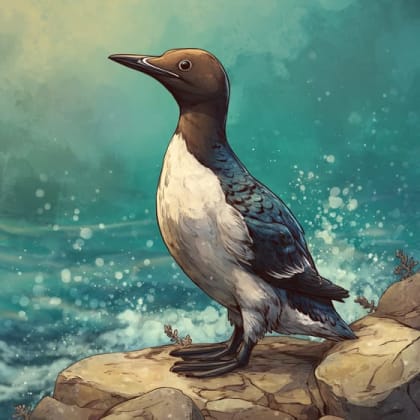



Tufted Duck
Aythya fuligula
The Tufted Duck is a lovely bird with a fluffy tuft on its head! It loves to swim in lakes and ponds, diving underwater to find tasty snacks like plants and small fish.
Hábitat: Wetlands
The Tufted Duck is a medium-sized diving duck. Males are glossy black with striking white flanks and a prominent, backward-curving tuft of feathers on their head, paired with bright yellow eyes. Females are a browner plumage, though they also possess a smaller, less distinct tuft.
Categoría
AvesRareza
Common
Peligro
1/5 · Muy bajo
Snaps
¡Sé la primera persona en hacer un snap!
Baby tufted ducks are called ducklings and can swim and dive just hours after hatching!
Sometimes, Tufted Ducks lay their eggs in other ducks' nests, letting them do all the parenting work!
The male's fancy head tuft grows longer with age, signaling his experience to potential mates!
They often nest near gulls and terns, who help protect their ducklings from predators!
Tufted Ducks can dive to depths of 6 meters because their heavy bodies help them sink quickly, reaching food others can't.
Tufted Ducks have powerful webbed feet that help them 'fly' underwater, chasing prey with incredible agility.
Tufted Ducks can forage effectively at night because their keen vision helps them locate food in low-light conditions underwater.
These ducks dive underwater to feast on tasty aquatic insects, mollusks, and small fish, along with some plants!
Dreissena polymorpha
An important food source, especially where mussels are abundant.

Haliaeetus albicilla
Large raptors like sea eagles prey on ducks.
Vulpes vulpes
Opportunistic foxes will prey on ducks, especially during nesting.
Potamogeton natans
Consumes seeds and vegetative parts of aquatic plants.
Describe a los animales, principalmente aves, que poseen una cubierta de plumas.
Se caracteriza por tener los dedos conectados por una membrana, lo que generalmente ayuda a nadar.
Los animales sociales viven en grupos organizados, cooperando para obtener beneficios de supervivencia como la búsqueda de alimento, la defensa y la cría de descendencia.
Los filtradores obtienen nutrientes filtrando partículas de alimentos suspendidos y pequeños organismos del agua.

Los organismos piscívoros son animales que subsisten principalmente de una dieta a base de peces.

Este rasgo de hábitat identifica especies que se encuentran en humedales, que son áreas de tierra saturadas de agua, ya sea permanente o estacionalmente, e incluyen marismas, pantanos y ciénagas.

Los hábitats de agua dulce incluyen entornos acuáticos no salinos como ríos, lagos, estanques y humedales, vitales para numerosas especies.

Los animales diurnos están activos principalmente durante el día y suelen descansar o dormir por la noche.

Los animales migratorios emprenden movimientos estacionales de una región a otra, típicamente en respuesta a cambios en el clima o la disponibilidad de alimentos.
Peligro
1/5 · Muy bajo
Always watch ducks from a distance and do not feed them bread.
40-47 cm
65-72 cm
0.5-1.1 kg
5-10 años
70 km/h
These ducks dive underwater to feast on tasty aquatic insects, mollusks, and small fish, along with some plants!
Wetlands
Pursuit
Acércate para separar los grupos y explorar dónde se ha fotografiado este objeto.
Los snaps recientes aparecerán aquí a medida que se añadan nuevas observaciones.