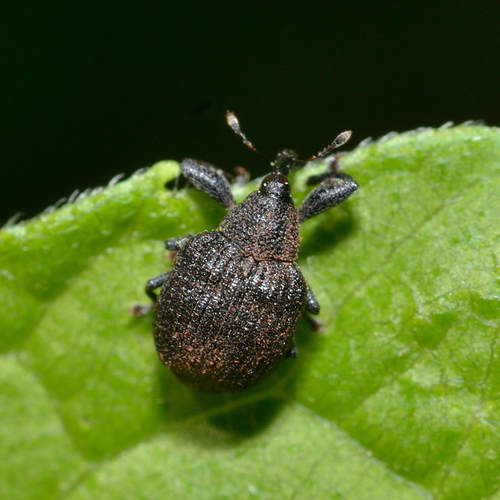
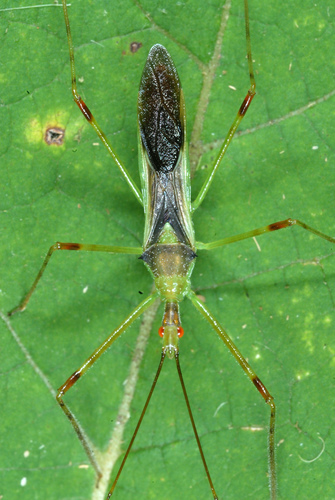
_(14693746782).jpg&width=800)





Two-striped Planthopper
Acanalonia bivittata
The Two-striped Planthopper is a small, colorful insect that loves to hop around plants. With its bright green body and two stripes, it looks like a tiny superhero of the garden!
Hábitat: Grasslands
The Two-striped Planthopper is typically bright green, often with two pale, yellowish stripes running lengthwise down its wedge-shaped wings. Its body is flattened and broad, making it blend seamlessly with plant leaves and stems.
Categoría
InsectosRareza
Common
Peligro
1/5 · Muy bajo
Snaps
¡Sé la primera persona en hacer un snap!
Baby planthoppers, called nymphs, grow fluffy white tails made of waxy fibers!
Some planthoppers communicate by sending vibrations through plants to find a mate!
Their bodies are often perfectly shaped and colored to look just like a plant leaf!
They can jump over 100 times their own body length to escape predators!
Two-striped Planthopper has strong hind legs that helps them leap many times their body length to escape danger.
Two-striped Planthopper has glands that produce waxy filaments covering its body for protection and camouflage.
Two-striped Planthopper has a straw-like mouthpart (proboscis) that helps them pierce plant stems to drink sap.
These tiny insects sip nutrient-rich sap from a variety of plants for energy and growth.
Misumena vatia
Spiders ambush planthoppers on flowers and leaves.
Spinus tristis
Birds forage for small insects like planthoppers.
.jpg&width=800)
Rubus allegheniensis
This plant serves as a common host for feeding and shelter.
Marcado con bandas paralelas o líneas de color.
El camuflaje describe a los organismos que poseen colores o patrones que les permiten mezclarse con su entorno.
Colorido describe a organismos u objetos que exhiben una amplia variedad de colores brillantes y distintivos.
Este rasgo caracteriza a los organismos cuya dieta consiste total o principalmente en material vegetal.

Los hábitats de pastizales son biomas terrestres dominados por pastos y plantas herbáceas, que sustentan a una variedad de animales de pastoreo.

Los animales diurnos están activos principalmente durante el día y suelen descansar o dormir por la noche.

Este rasgo identifica a los organismos que exhiben una rapidez excepcional en sus movimientos para cazar, escapar o desplazarse.

Describe organismos que transfieren polen, permitiendo la fertilización y reproducción de las plantas.
Todavía no hay alias listados.
Peligro
1/5 · Muy bajo
Be gentle and watch where you step to protect tiny insects like the planthopper.
5-7 mm
30-60 días
These tiny insects sip nutrient-rich sap from a variety of plants for energy and growth.
Grasslands
Foraging
6
Acércate para separar los grupos y explorar dónde se ha fotografiado este objeto.
Los snaps recientes aparecerán aquí a medida que se añadan nuevas observaciones.