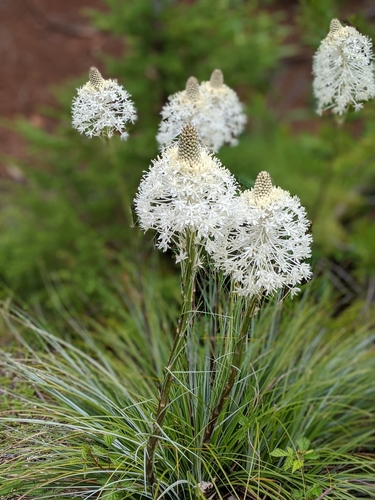

western roseroot
Rhodiola integrifolia
Western roseroot is a special plant that grows in rocky places. It has thick, fleshy leaves and beautiful yellow flowers that bloom in the summer. This plant is tough and can survive in harsh conditions!
Hábitat: Mountain regions
The western roseroot has sturdy stems topped with dense clusters of small, star-like flowers that can be yellow-green or reddish. Its thick, fleshy leaves are blue-green and grow alternately, often appearing like a succulent rosette near the base.
Categoría
PlantasRareza
Common
Peligro
1/5 · Muy bajo
Snaps
¡Sé la primera persona en hacer un snap!
Even in harsh environments, it helps prevent soil from washing away with its strong roots!
Its thick root smells like roses when cut, earning its unique name!
Some people traditionally use its roots to boost energy, like a natural pick-me-up!
This hardy plant can grow high up in mountains, often above the tree line!
Western roseroot can thrive in harsh alpine environments because it tolerates freezing temperatures and strong winds, helping it survive.
Western roseroot has fleshy leaves that store water, which helps it endure dry periods common in its high-altitude habitats.
Western roseroot has a thick, aromatic rhizome (underground stem) that anchors it firmly in rocky soils and stores nutrients.
Bombus bifarius
provides nectar and pollen
.jpg&width=800)
Marmota caligata
a food source for marmots
Ochotona princeps
collected and stored for winter
Las plantas con flores son cualquier planta que produce flores como parte de su ciclo reproductivo.
Las plantas de floración de verano producen sus flores durante la temporada estival, a menudo aportando un color vibrante cuando muchas otras plantas ya han terminado de florecer.
Las plantas medicinales poseen compuestos químicos que pueden utilizarse con fines terapéuticos para tratar enfermedades o mantener la salud.
Las plantas resistentes al frío son capaces de soportar bajas temperaturas y condiciones de congelación sin sufrir daños significativos.

Las plantas suculentas tienen partes engrosadas y carnosas, generalmente hojas o tallos, adaptadas para almacenar agua en climas áridos.

Describe plantas que son particularmente atractivas y beneficiosas para una amplia variedad de organismos polinizadores.

Este rasgo de hábitat identifica a las especies que se encuentran en regiones montañosas, caracterizadas por su gran altitud, pendientes pronunciadas y zonas climáticas variables.
Todavía no hay alias listados.
Peligro
1/5 · Muy bajo
Always look but don't touch wild plants unless a grown-up says it's okay.
5-30 cm
10-25 cm
0.5-1.5 cm
Verano
Sí
Ninguna
Perenne
Insectos
Acércate para separar los grupos y explorar dónde se ha fotografiado este objeto.
Los snaps recientes aparecerán aquí a medida que se añadan nuevas observaciones.