White-faced Meadowhawk
Sympetrum obtrusum
The White-faced Meadowhawk is a small dragonfly with a bright red body and a white face. They are often found resting on plants near water, where they hunt for tiny insects.
Hábitat: Wetlands
The White-faced Meadowhawk has a distinctive bright white face, especially in males, contrasting with its otherwise vibrant red body. Females are typically yellow-brown, but can also show some red as they mature. Their clear wings make their body colors stand out strikingly.
Categoría
InsectosRareza
Common
Peligro
1/5 · Muy bajo
Snaps
¡Sé la primera persona en hacer un snap!
A dragonfly's huge eyes can have up to 30,000 tiny lenses, making them incredible hunters.
Before becoming an adult, they live underwater for months, breathing with gills like a fish!
Dragonflies were among Earth's very first winged insects, flying over 300 million years ago!
Their transparent wings beat independently, allowing them to perform amazing aerial stunts.
White-faced Meadowhawks have huge compound eyes that give them nearly 360-degree vision, helping them spot tiny prey from far away.
White-faced Meadowhawks can fly forwards, backwards, hover, and turn on a dime, making them expert hunters in the air.
Their young (naiads) are fierce underwater predators, snatching other aquatic creatures with a special extendable jaw.
White-faced Meadowhawks can quickly warm their bodies by basking in the sun, powering up their muscles for speedy flight.
These speedy hunters keep bug populations in check by eating tiny flying insects!
Diferencias por edad: Young White-faced Meadowhawks (naiads) hunt aquatic insects and tadpoles underwater; adults catch flying insects in the air.
Aedes aegypti
Adults catch mosquitoes mid-air.
Chironomus plumosus
A primary food source for adult dragonflies.
Lithobates catesbeianus
Large frogs prey on adult dragonflies.
Cyanocitta cristata
Birds often snatch dragonflies from the air or perches.
Lepomis macrochirus
Fish frequently eat dragonfly naiads underwater.
Las criaturas aéreas pasan una parte importante de su vida en el aire, utilizando el vuelo para diversas actividades como la caza, la migración o la anidación.
Colorido describe a organismos u objetos que exhiben una amplia variedad de colores brillantes y distintivos.
Este rasgo identifica a los organismos cuya dieta consiste principalmente en insectos y otros pequeños invertebrados.
Este rasgo de hábitat identifica especies que se encuentran en humedales, que son áreas de tierra saturadas de agua, ya sea permanente o estacionalmente, e incluyen marismas, pantanos y ciénagas.

Los animales diurnos están activos principalmente durante el día y suelen descansar o dormir por la noche.

Este rasgo identifica a los organismos que exhiben una rapidez excepcional en sus movimientos para cazar, escapar o desplazarse.

Describe organismos que transfieren polen, permitiendo la fertilización y reproducción de las plantas.
Todavía no hay alias listados.
Peligro
1/5 · Muy bajo
Dragonflies are harmless, but it's best to watch them from a distance.
45-55 mm
29-36 mm
30-60 días
25 km/h
These speedy hunters keep bug populations in check by eating tiny flying insects!
Wetlands
Pursuit
6
Acércate para separar los grupos y explorar dónde se ha fotografiado este objeto.
Los snaps recientes aparecerán aquí a medida que se añadan nuevas observaciones.

British Columbia, CA
Puedes ver Western Skunk Cabbage, Devil's Club y Pacific Ninebark.
Ver guía →
British Columbia, CA
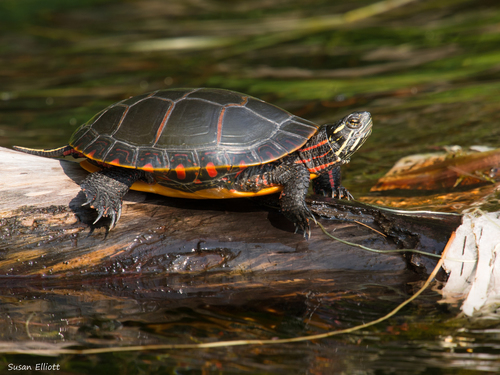
Puedes ver Tortuga Pintada, Solomon's Plume y Saskatoon.
Ver guía →