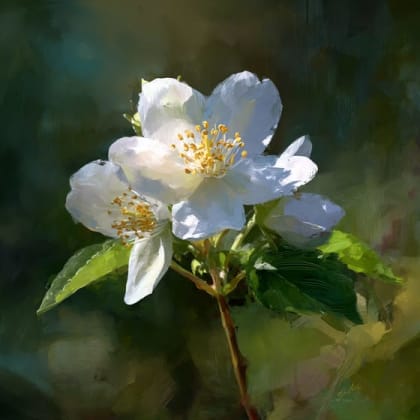
Woodland Cudweed
Omalotheca sylvatica
Woodland Cudweed is a soft, fuzzy plant that grows in forests. It has small, white flowers that look like tiny stars and can be found in shady spots.
Hábitat: Forests
The Woodland Cudweed has erect, slender stems covered in soft, gray-green, woolly leaves. Its small, button-like flower heads are clustered at the stem tops, displaying muted yellowish-brown tones. This plant often blends into the background with its unassuming, felt-like appearance.
Categoría
PlantasRareza
Common
Peligro
1/5 · Muy bajo
Snaps
¡Sé la primera persona en hacer un snap!
Despite its name, Woodland Cudweed often loves growing in sunny, disturbed open spots!
Its name "cudweed" refers to how its fuzzy leaves resemble cud, sometimes fed to cattle!
Its small, clustered flowers look like miniature bouquets peeking out from its felt-like leaves!
These tiny plants are part of the huge daisy family, just like giant sunflowers!
Woodland Cudweed has a dense layer of tiny hairs on its leaves that helps it survive dry conditions and harsh sun.
Its lightweight seeds have a parachute-like structure, allowing them to ride on wind currents and spread far and wide.
Woodland Cudweed can rapidly grow in disturbed areas, quickly taking advantage of open ground where other plants struggle.
Apis mellifera
Visits flowers for nectar and pollen.
Bombus terrestris
A common bee that aids in pollination.
Arion rufus
Slugs may graze on its leaves.
Peludo describe a los animales que poseen una cubierta densa de pelo o pelaje suave.
Las plantas con flores son cualquier planta que produce flores como parte de su ciclo reproductivo.
Las plantas tolerantes a la sombra están adaptadas para crecer y prosperar en áreas con bajos niveles de luz, requiriendo menos luz solar directa.
Las plantas medicinales poseen compuestos químicos que pueden utilizarse con fines terapéuticos para tratar enfermedades o mantener la salud.

Las plantas tolerantes a la sequía pueden sobrevivir y florecer en condiciones de escasa disponibilidad de agua.

Describe plantas que son particularmente atractivas y beneficiosas para una amplia variedad de organismos polinizadores.

Los hábitats boscosos son entornos terrestres dominados por una densa cubierta arbórea, que sustentan una gran diversidad de vida animal y vegetal.
Todavía no hay alias listados.
Peligro
1/5 · Muy bajo
Always look but don't touch unknown plants, and ask an adult if you're curious!
10-60 cm
0.3-0.5 cm
Verano a otoño
No
Ninguna
Anual
Insectos
Forests
Acércate para separar los grupos y explorar dónde se ha fotografiado este objeto.
Los snaps recientes aparecerán aquí a medida que se añadan nuevas observaciones.








_02.jpg&width=800)