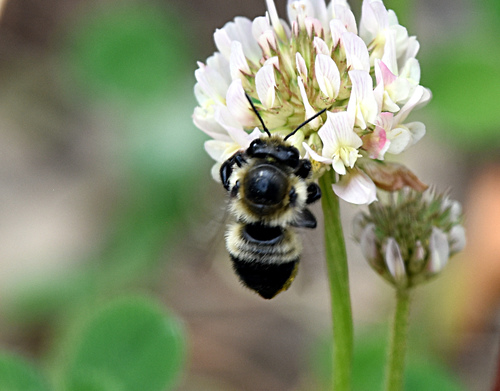





Xanthosarus
xanthosarus
'Xanthosarus' es un subgénero fascinante de abejas cortadoras de hojas dentro del diverso género Megachile. Estas maravillas solitarias son conocidas por sus meticulosas habilidades arquitectónicas, utilizando sus poderosas mandíbulas para cortar piezas circulares u ovaladas perfectas de las hojas de las plantas. En lugar de producir miel en una colmena bulliciosa, cada hembra actúa como madre soltera, construyendo nidos intrincados en forma de cigarro en tallos huecos, madera en descomposición o cavidades en el suelo para criar a sus crías. Más allá de sus increíbles hábitos de anidación, las abejas Xanthosarus son polinizadores excepcionales. Debido a que carecen de las cestas de polen en sus patas traseras típicas de las abejas melíferas, transportan el polen en un denso cepillo de pelos especializados debajo de su abdomen, conocido como escopa. Este método de transporte único hace que se desprenda más polen a medida que visitan las flores, lo que las hace altamente eficientes en la polinización de flores silvestres nativas e importantes cultivos agrícolas.
Hábitat: Se encuentran típicamente en hábitats abiertos y soleados como praderas, prados, bosques abiertos y jardines domésticos donde abundan tanto las hojas fibrosas como las diversas plantas con flores.
Las abejas Xanthosarus son insectos robustos, de cuerpo fornido, que generalmente miden entre 1 y 2 centímetros de longitud, a menudo pareciendo ligeramente más grandes y peludas que la abeja melífera común. Son típicamente de color oscuro, pero están cubiertas de densas bandas de pelos pálidos, amarillentos o marrón dorado, especialmente alrededor del tórax y el abdomen. Un identificador visual clave para las hembras es la "escopa"—una densa estera en forma de cepillo de pelos rígidos en la parte inferior de su abdomen que a menudo brilla de color amarillo brillante o naranja cuando está cargada de polen. Cuando están en reposo, sus alas se pliegan planas sobre sus espaldas, y sus grandes y prominentes mandíbulas, que están perfectamente evolucionadas para cortar hojas, a menudo pueden verse en una inspección cercana.
Categoría
InsectosRareza
Común
Peligro
1/5 · Muy bajo
Snaps
¡Sé la primera persona en hacer un snap!
Debido a que transportan el polen en el abdomen en lugar de las patas, una sola abeja cortadora de hojas puede realizar el trabajo de polinización de hasta 20 abejas melíferas.
Las abejas cortadoras de hojas son como las perforadoras de la naturaleza; pueden cortar un círculo perfecto de una hoja en solo unos segundos.
No producen miel ni viven en colmenas; cada hembra es una 'madre soltera' que realiza todo el trabajo de construir nidos y recolectar alimento por sí misma.
Al construir un nido, la abeja madre crea un 'pan de abeja'—una bola pegajosa de polen y néctar—, deposita un huevo sobre ella y lo sella en una envoltura ajustada de hoja.
Los adultos se alimentan exclusivamente de néctar floral para obtener energía y recolectan polen para aprovisionar sus celdas nido para las larvas en desarrollo.
Diferencias por edad: Las larvas consumen una mezcla sólida de polen y néctar provista por la madre, mientras que los adultos consumen principalmente néctar líquido.

Rosa acicularis
Proporciona materiales esenciales para el nido.

Medicago sativa
Depende de estas abejas para una polinización crítica.
Coelioxys spp.
Pone sus huevos en los nidos de las abejas cortadoras de hojas para robar sus provisiones.
Marcado con manchas o parches de un color diferente.
Los animales solitarios viven solos durante la mayor parte de su vida y solo interactúan con otros para aparearse o cuidar de sus crías.
Los animales arborícolas viven principalmente en los árboles, utilizándolos como refugio, alimento y protección contra los depredadores.
Colorido describe a organismos u objetos que exhiben una amplia variedad de colores brillantes y distintivos.
Este rasgo identifica a los organismos cuya dieta consiste total o principalmente en tejido animal.
Todavía no hay alias listados.
Las colecciones para este objeto aparecerán aquí a medida que se añadan más temas.
Peligro
1/5 · Muy bajo
Todavía no hay notas especiales de seguridad.
Busca seis patas, antenas, tres secciones en el cuerpo y la forma de las alas. Los escarabajos tienen las alas delanteras endurecidas; las moscas solo tienen un par que funciona. Los insectos diminutos pueden necesitar un primer plano antes de que se vea su grupo. Identificador de insectos: sube una foto y compara los detalles visibles.
1-2 cm
1-3 cm
0.0001-0.0003 kg
1 años
32 km/h
Los adultos se alimentan exclusivamente de néctar floral para obtener energía y recolectan polen para aprovisionar sus celdas nido para las larvas en desarrollo.
Se encuentran típicamente en hábitats abiertos y soleados como praderas, prados, bosques abiertos y jardines domésticos donde abundan tanto las hojas fibrosas como las diversas plantas con flores.
Acércate para separar los grupos y explorar dónde se ha fotografiado este objeto.
Los snaps recientes aparecerán aquí a medida que se añadan nuevas observaciones.
Llévate el descubrimiento
Haz una foto con Snappit, identifica la especie y guarda el hallazgo en tu colección.