






Yellow-headed Blackbird
Xanthocephalus xanthocephalus
The Yellow-headed Blackbird is a striking bird with a bright yellow head and a black body. They love to sing and can often be found near wetlands, making their cheerful sounds a delight to hear.
Hábitat: Wetlands
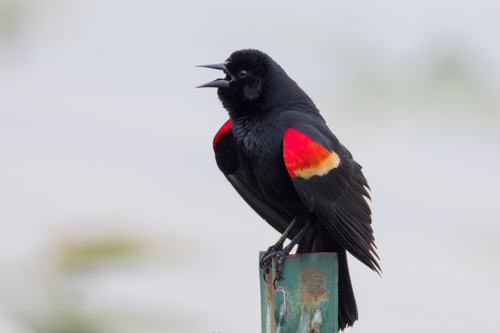
The Yellow-headed Blackbird has a striking appearance, with males sporting an entirely black body, a bright yellow head and chest, and a distinct white patch on the wing. Females are duller, brownish-black with a yellow wash on the face and throat, and streaked underparts.
Categoría
AvesRareza
Common
Peligro
1/5 · Muy bajo
Snaps
¡Sé la primera persona en hacer un snap!
Male Yellow-headed Blackbirds fiercely defend their territory by puffing up their yellow feathers!
Their loud, raspy call sometimes sounds like a rusty gate opening!
These birds often nest in colonies with hundreds of other blackbirds!
Yellow-headed Blackbirds will sometimes steal nesting materials from other bird species!
Yellow-headed Blackbirds can build intricate cup nests because of their weaving skills, anchoring them to marsh plants.
This bird has a unique, reedy call that helps them communicate and attract mates within their large breeding colonies.
Yellow-headed Blackbirds can expertly forage for insects in marsh vegetation and fields, providing food for their young.
These birds munch on juicy insects and tasty seeds found in their marshy homes!
Diferencias por edad: Nestlings are fed almost exclusively insects, while adults have a broader diet of insects and seeds.
Buteo jamaicensis
Adults and fledglings can be prey.
Thamnophis sirtalis
Nests and young are vulnerable.
Typha latifolia
Nests are often built within dense cattail stands.
Anax junius
Forages for dragonfly larvae and adults.
Describe a los animales, principalmente aves, que poseen una cubierta de plumas.
Los animales sociales viven en grupos organizados, cooperando para obtener beneficios de supervivencia como la búsqueda de alimento, la defensa y la cría de descendencia.
Colorido describe a organismos u objetos que exhiben una amplia variedad de colores brillantes y distintivos.
Este rasgo identifica a los organismos cuya dieta consiste principalmente en insectos y otros pequeños invertebrados.

Este rasgo de hábitat identifica especies que se encuentran en humedales, que son áreas de tierra saturadas de agua, ya sea permanente o estacionalmente, e incluyen marismas, pantanos y ciénagas.

Los animales diurnos están activos principalmente durante el día y suelen descansar o dormir por la noche.
Todavía no hay alias listados.
Peligro
1/5 · Muy bajo
Enjoy watching birds from a distance, and don't disturb their nests.
21-26 cm
40-45 cm
0.038-0.075 kg
6-8 años
50 km/h
These birds munch on juicy insects and tasty seeds found in their marshy homes!
Wetlands
Foraging
Acércate para separar los grupos y explorar dónde se ha fotografiado este objeto.
Los snaps recientes aparecerán aquí a medida que se añadan nuevas observaciones.




.jpg)









