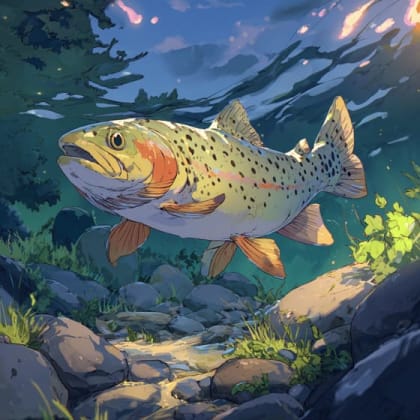
Elephantfish
Pollimyrus
The Elephantfish is a unique fish with a long trunk-like snout. It uses this snout to search for food on the riverbed. These fish are excellent at camouflaging themselves in the murky waters.
Habitat: Freshwater
The Elephantfish is a small, slender fish, typically brownish-grey. It has a distinctive elongated, downward-curving snout, resembling an elephant's trunk, which makes it visually unique among freshwater fish. Its body is often marked with subtle darker bands.
Category
FishRarity
Rare
Danger
2/5 · Low
Snaps
Be the first to snap!
Elephantfish have brains that are enormous for a fish, sometimes 3% of their body weight!
Their trunk-like snout is so strong, they can move small pebbles to find yummy hidden snacks!
These fish can map out their entire surroundings using electricity, even when it's pitch black!
They can 'talk' using electric pulses, sending secret messages that humans can't feel or hear!
Elephantfish can generate weak electric fields around themselves to 'see' their surroundings and navigate in darkness or murky water.
Elephantfish has a flexible, trunk-like snout that helps them powerfully probe for tiny food morsels buried deep in the riverbed.
Elephantfish can send special electric signals to communicate with other Elephantfish, helping them find mates or warn about danger.
Tiny bugs and worms hiding in the mud are the Elephantfish's favorite snack, found with its special snout.
Lates niloticus
a common predator in African rivers
Chironomus plumosus
loves to eat these tiny insect larvae
Nymphaea lotus
hides among its roots during the day
Wildlife encompasses all undomesticated animal and plant life existing in their natural habitats.
Solitary animals live alone for most of their lives, only interacting with others for mating or parental care.
Camouflaged describes organisms that possess coloring or patterns that allow them to blend into their environment.
Piscivorous organisms are animals that primarily subsist on a diet of fish.

This trait describes organisms capable of generating electric fields or electric shocks.

Freshwater habitats include non-saline aquatic environments such as rivers, lakes, ponds, and wetlands, vital for numerous species.

Aquatic habitats encompass environments where organisms live predominantly in water, including oceans, rivers, lakes, and wetlands.
Danger
2/5 · Low
Avoid touching unknown fish in the wild to stay safe.
The easiest way to identify Elephantfish is to use the Snappit nature identifier app.
5-10 cm
0.005-0.02 kg
5-8 years
Tiny bugs and worms hiding in the mud are the Elephantfish's favorite snack, found with its special snout.
Freshwater
Foraging
5 m
Zoom in to split clusters and explore where this object has been snapped.
Recent snaps will appear here as new observations are added.
Take the discovery with you
Snap it with Snappit to identify it, learn what makes it special, and add the discovery to your collection.