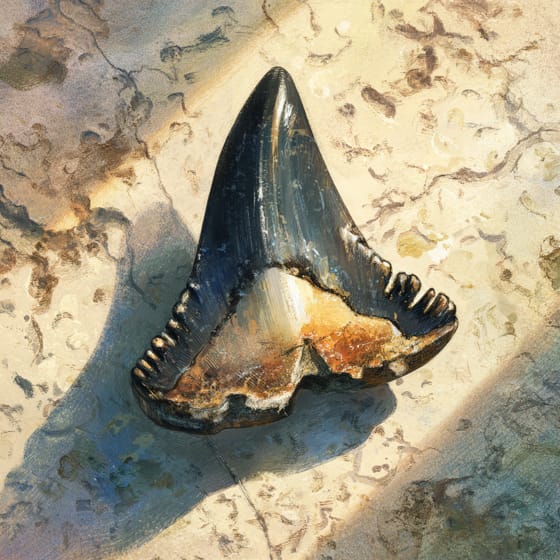





Fossilized Shark Tooth
A fossilized shark tooth is a tooth from a shark that lived a long time ago. Sharks have been around for millions of years!
The Fossilized Shark Tooth is often a triangular or blade-like shape, ranging from a few centimeters to over 15 cm long. Its colors vary from glossy black to grey, brown, or tan, often showcasing mineralization. Distinctive serrated edges and a robust root base differentiate it from modern teeth.
Category
AncientRarity
Rare
Danger
1/5 · Very low
Snaps
Be the first to snap!
Ancient people once thought fossil shark teeth were dragon tongues!
Minerals replace the original tooth material, turning it into solid stone!
Sharks shed tens of thousands of teeth, making these fossils common!
Some fossil shark teeth are bigger than a human hand!
Fossilized Shark Tooth has 'Time Traveler' qualities that help them reveal secrets of ancient oceans and prehistoric giants.
Fossilized Shark Tooth can achieve 'Mineral Strength' because minerals replaced its original material, making it incredibly durable for millions of years.
Fossilized Shark Tooth carries a 'Predator's Legacy' that helps them tell the story of colossal ancient sharks and their hunting prowess.
These ancient predators ate very large marine animals in the prehistoric oceans.
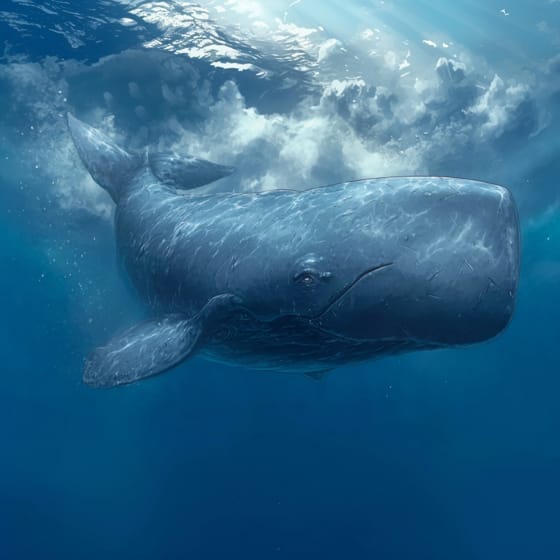
Physeter macrocephalus
Ancestors of modern sperm whales were prey.
Cetotherium rathbuni
Large baleen whales were a primary food source.
Hemipristis serra
Other large sharks likely fell prey to it.
Colorful describes organisms or objects displaying a wide range of bright and distinct colors.
Ancient refers to organisms, objects, or geological formations that have existed for an extremely long period.
An artifact is an object made or modified by human culture, typically of historical or archaeological interest.
Possessing sharp, pointed projections or spines on the body or surface.

A fossil is the preserved remains or traces of an ancient organism embedded in rock or other geological deposits.
Danger
1/5 · Very low
Explore with care and ask an adult if you're unsure what to do.
The easiest way to identify Fossilized Shark Tooth is to use the Snappit nature identifier app.
15-20 m
30000-60000 kg
These ancient predators ate very large marine animals in the prehistoric oceans.
Pursuit
Cenozoic
3.6
Zoom in to split clusters and explore where this object has been snapped.
Recent snaps will appear here as new observations are added.
Take the discovery with you
Snap it with Snappit to identify it, learn what makes it special, and add the discovery to your collection.