Horseshoe Crab
Limulus polyphemus
Horseshoe crabs are ancient creatures that look like armored helmets with long tails. They live in the ocean and are important for medical research.
Habitat: Coastal areas
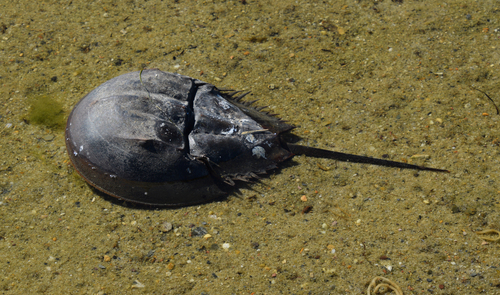
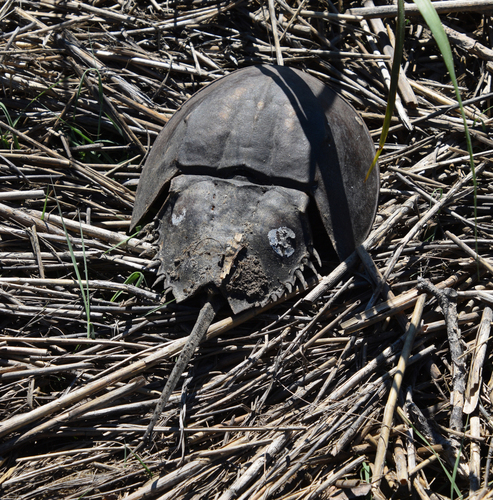
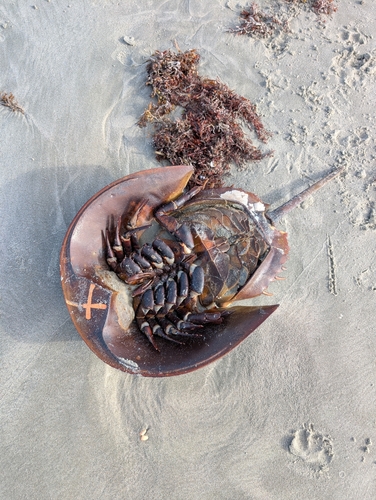
The Horseshoe Crab has a hard, helmet-shaped carapace that is typically brownish-green. Its unique dome-like shell and long, spiky tail, called a telson, make it visually distinct from true crabs. Its smooth, rounded front shell protects most of its body.
Category
InvertebrateRarity
Common
Danger
2/5 · Low
Snaps
124
A female horseshoe crab can lay up to 80,000 tiny eggs in a single nesting season!
Horseshoe crabs breathe using 'gill books,' special leaf-like structures hidden under their shell.
They are more closely related to spiders and scorpions than to true crabs or insects!
They have 10 eyes, some on top and some underneath their shell, for sensing light!
Horseshoe Crab has unique copper-based blue blood that helps them fight off bacteria and detect harmful substances.
Horseshoe Crab has a tough, multi-jointed exoskeleton that helps protect them from many ocean predators.
Horseshoe Crab can use its long, spiky telson (tail) that helps them flip themselves back over if overturned.
They are bottom-feeders, eating small invertebrates and worms found in the seafloor.

Calidris canutus
Their eggs are a critical food source for migrating birds.
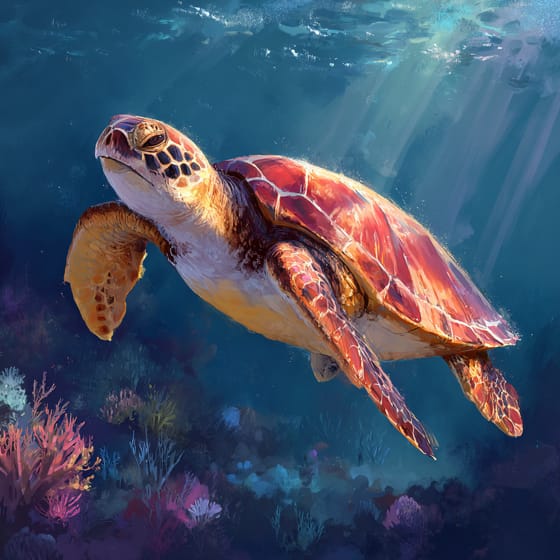
Caretta caretta
Adult horseshoe crabs are part of their diet.
Carcharhinus obscurus
Sharks occasionally prey on adult horseshoe crabs.
This trait identifies organisms whose diet includes both plant and animal matter.
This trait signifies organisms belonging to a very old evolutionary group with ancestors dating back millions of years.
Armored describes animals protected by a hard, external covering or shell for defense.
Describes a species whose presence and role have a disproportionately large effect on its environment.
Regenerative organisms possess the ability to regrow lost or damaged body parts, tissues, or organs.

Marine habitats encompass all saltwater environments of the Earth's oceans, supporting an immense diversity of aquatic life.

Nocturnal animals are primarily active during the nighttime hours, typically resting or sleeping during the day.

Venomous organisms produce toxins that are injected into another animal, typically through a bite or sting.
Danger
2/5 · Low
If you see a horseshoe crab on the beach, observe from a safe distance and don't touch them.
The easiest way to identify Horseshoe Crab is to use the Snappit nature identifier app.
300-600 mm
3650-7300 days
They are bottom-feeders, eating small invertebrates and worms found in the seafloor.
Coastal areas
Foraging
10
Zoom in to split clusters and explore where this object has been snapped.
Jun 13, 2026
Wellfleet Bay Wildlife SanctuaryPhoto attribution
(c) Natasha Haggard, some rights reserved (CC BY)
License: CC BY 4.0 ↗
Image may be shown cropped inside the card frame.
Jun 13, 2026
Wellfleet Bay Wildlife SanctuaryPhoto attribution
(c) Natasha Haggard, some rights reserved (CC BY)
License: CC BY 4.0 ↗
Image may be shown cropped inside the card frame.
May 27, 2026
Sullivan's Island Historic DistrictPhoto attribution
no rights reserved
License: CC0 1.0 ↗
Image may be shown cropped inside the card frame.

Rhode Island, US
You might spot Common Eastern Bumble Bee and Osprey.
View guide →

Rhode Island, US
You might spot Rugosa Rose and American Herring Gull.
View guide →

New Jersey, US
You might spot Brant, Laughing Gull, and Great Black-Backed Gull.
View guide →

US
You might spot Firewheel, Domestic Horse, and Atlantic Horseshoe Crab.
View guide →

New York, US
You might spot Common Eastern Bumble Bee and American Robin.
View guide →
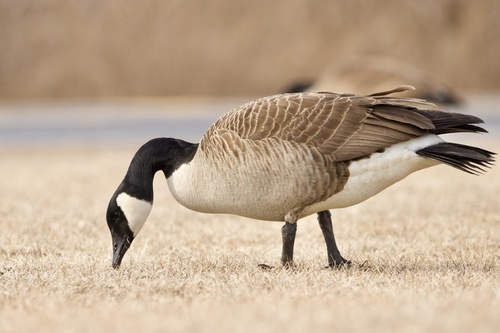
New York, US
You might spot Canada Goose and Atlantic Horseshoe Crab.
View guide →
Take the discovery with you
Snap it with Snappit to identify it, learn what makes it special, and add the discovery to your collection.