



Obsidian
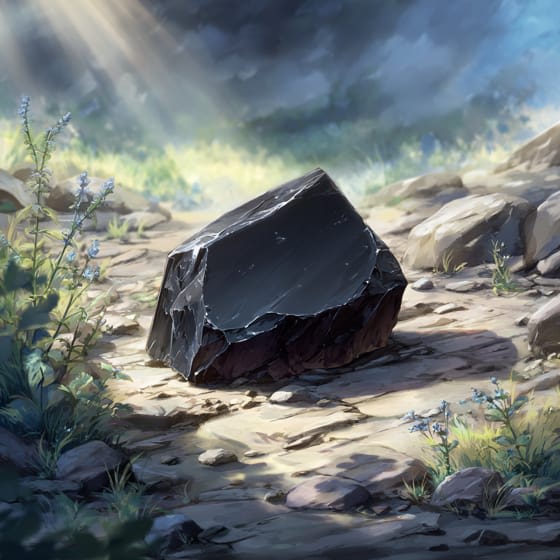
Obsidian is a shiny black rock that forms from cooled lava. It looks like glass and can be very smooth!
The Obsidian is a natural volcanic glass, typically deep black, but can also be brown, green, or red. It has a distinctive glassy luster and often breaks with incredibly sharp, curved edges. Some types display beautiful iridescent "rainbow" sheens.
Category
MineralRarity
Common
Danger
1/5 · Very low
Snaps
Be the first to snap!
Ancient doctors used obsidian blades for precise surgery thousands of years ago!
Because it's so smooth, ancient people polished obsidian to make some of the first mirrors!
It forms so fast from lava, it doesn't even have time to grow crystals like other rocks.
Obsidian can be found in many places, including the bottom of oceans!
Obsidian has a conchoidal fracture that allows it to break into edges sharper than surgical steel.
Obsidian forms when lava cools incredibly fast, preventing crystal growth and creating a smooth, natural glass.
Tiny bubbles or mineral inclusions in some obsidian scatter light, creating stunning rainbow or snowflake patterns.
Igneous rocks are formed from the cooling and solidification of molten rock (magma or lava).
Vitreous luster describes a mineral's appearance when reflecting light, resembling glass, often translucent or transparent.
Natural refers to organisms, materials, or phenomena existing or produced by nature, not artificially created.
Danger
1/5 · Very low
Handle gently and avoid sharp edges. Ask an adult before picking anything up.
The easiest way to identify Obsidian is to use the Snappit nature identifier app.
black, brown, green, red, rainbow iridescence
5
vitreous
2.5
Zoom in to split clusters and explore where this object has been snapped.
Recent snaps will appear here as new observations are added.
Take the discovery with you
Snap it with Snappit to identify it, learn what makes it special, and add the discovery to your collection.