



Pyrite
Pyrite is also known as 'fool's gold' because it looks like real gold! It shines brightly and is often found in shiny clusters.
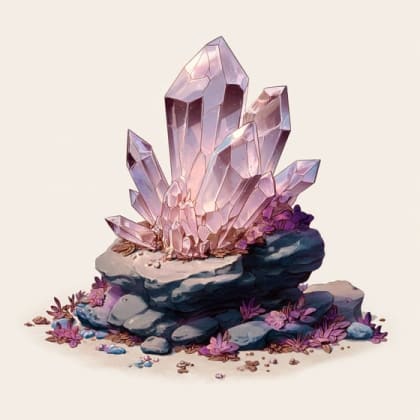
The Pyrite is a shiny, metallic mineral often appearing as brass-yellow or a pale gold color. It commonly forms perfect cube-shaped crystals, sometimes with tiny striations, and can be mistaken for real gold due to its bright, reflective surface.
Category
MineralRarity
Common
Danger
1/5 · Very low
Snaps
Be the first to snap!
Ancient Incas polished large Pyrite pieces to use them as reflective mirrors!
Its name comes from the Greek word 'pyr,' meaning fire, because it can create sparks!
Sometimes Pyrite crystals grow into perfect spheres or even star-like shapes called 'sun dollars'!
Tiny Pyrite cubes can form inside fossils, preserving ancient life's shapes in sparkling stone!
Pyrite has a unique property to create sparks when struck, making it a natural fire starter!
Pyrite contains sulfur, which can be extracted and used to make important chemicals like sulfuric acid.
Pyrite's natural reflectivity allowed ancient civilizations to polish it and use it as decorative mirrors.
Metallic refers to substances, materials, or objects possessing properties characteristic of metals, such as luster and conductivity.
Metallic luster describes a mineral's appearance when reflecting light, resembling polished metal, often opaque.
Crystalline describes a mineral or rock composed of crystals, often exhibiting a regular atomic structure and geometric external form.
Danger
1/5 · Very low
Handle gently and avoid sharp edges. Ask an adult before picking anything up.
The easiest way to identify Pyrite is to use the Snappit nature identifier app.
brass-yellow, golden-metallic
6.5
metallic
5
isometric
Zoom in to split clusters and explore where this object has been snapped.
Recent snaps will appear here as new observations are added.
Take the discovery with you
Snap it with Snappit to identify it, learn what makes it special, and add the discovery to your collection.