



Gypsum
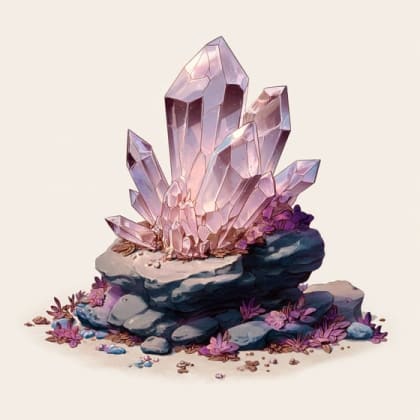
Gypsum is a soft mineral that is often used to make plaster. It can be white or transparent.
The Gypsum is often white or colorless, sometimes appearing grey, yellow, or pink. It can form clear, glassy crystals or fibrous, silky masses, making it look quite distinct from other common minerals.
Category
MineralRarity
Common
Danger
1/5 · Very low
Snaps
Be the first to snap!
Ancient Egyptians used gypsum plaster to help build the pyramids!
It's a secret ingredient in cement, plaster, and even some toothpastes!
The world's largest crystals, up to 12 meters long, are gypsum!
You can find gypsum crystals that look like flowers, called 'desert roses'!
Gypsum has a very low hardness of 2 on the Mohs scale, making it soft enough to be scratched by a fingernail.
Gypsum contains water in its crystal structure, which can be released by heating to create plaster.
Some gypsum forms transparent crystals called selenite, which are so clear you can see right through them.
Sedimentary rocks are formed from the accumulation and compaction of sediments, organic matter, or chemical precipitates.
Crystalline describes a mineral or rock composed of crystals, often exhibiting a regular atomic structure and geometric external form.
Natural refers to organisms, materials, or phenomena existing or produced by nature, not artificially created.
Danger
1/5 · Very low
Handle gently and avoid sharp edges. Ask an adult before picking anything up.
The easiest way to identify Gypsum is to use the Snappit nature identifier app.
white, colorless, grey, yellow, brown, pink
2
vitreous
2.3
monoclinic
Zoom in to split clusters and explore where this object has been snapped.
Recent snaps will appear here as new observations are added.
Take the discovery with you
Snap it with Snappit to identify it, learn what makes it special, and add the discovery to your collection.