

Quahog Clam
Mercenaria mercenaria
Quahog clams are shellfish that live in the sandy bottoms of coastal waters. They have hard shells that protect their soft bodies inside.
Habitat: Coastal areas
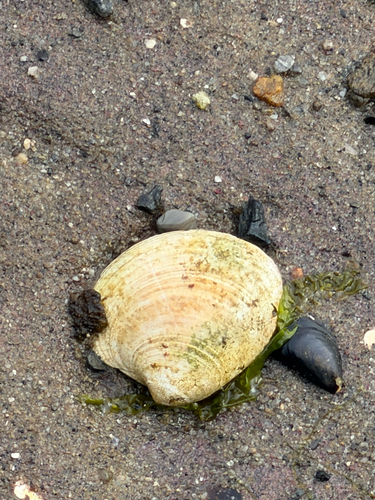
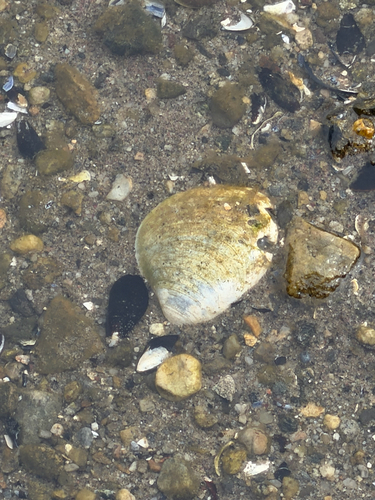
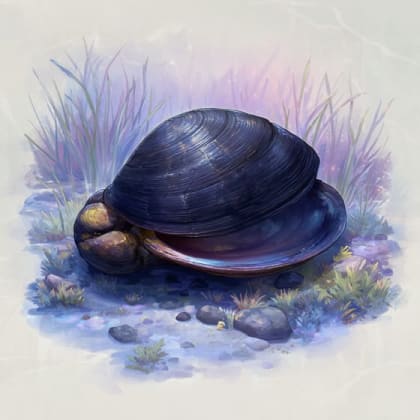
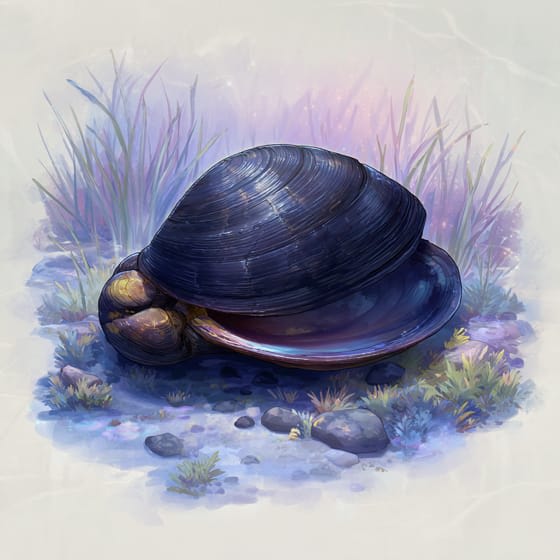
The Quahog Clam has a thick, hard shell, typically oval or heart-shaped, with prominent concentric growth rings. Its exterior is usually dull grey or off-white, sometimes with lighter bands, while the interior can reveal a striking purple.
Category
InvertebrateRarity
Common
Danger
2/5 · Low
Snaps
9
Its strong foot helps it dig deep into the seabed, making a cozy home!
The clam's shell grows bigger by adding new layers from the inside out!
They don't have eyes, but can still sense light and dark in their watery world!
You can tell a quahog's age by counting its growth rings, just like a tree!
Quahog Clam can clean vast amounts of water by filter-feeding, using its siphons to draw in tiny food particles.
Quahog Clam has an incredibly long lifespan, potentially living over 500 years, making it one of Earth's oldest animals.
Quahog Clam can quickly bury itself into the sand or mud using its muscular foot, hiding from hungry predators.
Tiny ocean bits are a quahog's favorite meal, filtered from the water.
Carcinus maenas
Crabs use strong claws to crush quahog shells.
Pagrus pagrus
Fish with strong jaws can feed on buried clams.
Asterias forbesi
Sea stars pry open shells with their powerful arms.
.jpg&width=800)
Haematopus palliatus
Birds use their strong bills to open clam shells.
Ancient refers to organisms, objects, or geological formations that have existed for an extremely long period.
This trait characterizes organisms with an exceptionally long lifespan compared to others of their kind.
A fossil is the preserved remains or traces of an ancient organism embedded in rock or other geological deposits.
Natural refers to organisms, materials, or phenomena existing or produced by nature, not artificially created.
Danger
2/5 · Low
Always wash your hands after handling clams or being near the water where they live.
The easiest way to identify Quahog Clam is to use the Snappit nature identifier app.
1 kg
507 years
Tiny ocean bits are a quahog's favorite meal, filtered from the water.
Coastal areas
Filter Feeding
15 cm
Zoom in to split clusters and explore where this object has been snapped.
May 31, 2026
Connecticut College ArboretumPhoto attribution
(c) Sawyer Baran, some rights reserved (CC BY)
License: CC BY 4.0 ↗
Image may be shown cropped inside the card frame.
May 31, 2026
Connecticut College ArboretumPhoto attribution
(c) Sawyer Baran, some rights reserved (CC BY)
License: CC BY 4.0 ↗
Image may be shown cropped inside the card frame.

Rhode Island, US
You might spot Rugosa Rose and American Herring Gull.
View guide →

Connecticut, US
You might spot Common Mugwort and Canada Goose.
View guide →

Connecticut, US
You might spot Osprey, Diamondback Terrapin, and Monarch.
View guide →

Connecticut, US
You might spot Brant, American Herring Gull, and Double-Crested Cormorant.
View guide →

Connecticut, US
You might spot Common Mugwort, Canada Goose, and American Herring Gull.
View guide →

US
You might spot Rugosa Rose and American Herring Gull.
View guide →
Take the discovery with you
Snap it with Snappit to identify it, learn what makes it special, and add the discovery to your collection.