





Small Heath
Coenonympha pamphilus
The Small Heath butterfly is a tiny, brown butterfly that flutters around fields and meadows. It loves to bask in the sun on warm days!
Habitat: Grasslands and meadows
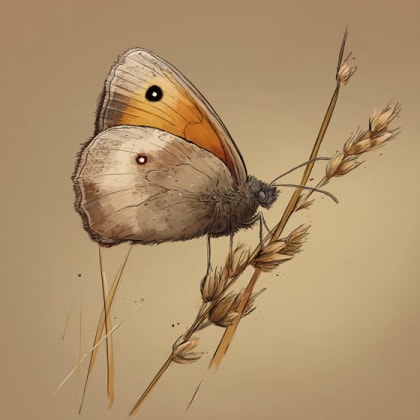
The Small Heath has orange-brown wings with a distinctive small black eyespot on each forewing. Its hindwings are mottled grey-brown underneath, helping it blend in. This small size helps differentiate it from similar brown butterflies.
Category
InsectsRarity
Common
Danger
2/5 · Low
Snaps
2
Its caterpillars are bright green, making them masters of disguise in grassy fields!
Small Heaths can have up to three generations of butterflies in just one year!
Some Small Heath caterpillars spend winter as tiny, tough grubs, waiting for spring!
They get their name from preferring sunny, open heathland and grassy areas.
Small Heath has subtly patterned hindwings that help them blend perfectly with dry grasses and leaves when at rest.
Small Heath can fly with a low, erratic, flickering motion close to the ground, making them hard for predators to catch.
Small Heath has dark scales on its wings that absorb sunlight, helping them quickly warm up for flight on cool mornings.
Small Heath has a single small black 'eye-spot' on each forewing, which might confuse predators into striking a non-vital part.
Adult Small Heaths sip nectar from flowers, while their caterpillars munch on grass.
Age differences: Caterpillars feed on grasses, while adult butterflies drink nectar from flowers.
Turdus merula
Birds hunt adult butterflies.
Festuca rubra
Caterpillars feed on grass leaves.
_Lotus_corniculatus_-_Plant_habit.jpg&width=800)
Lotus corniculatus
Adults sip nectar and spread pollen.
Wildlife encompasses all undomesticated animal and plant life existing in their natural habitats.
Grassland habitats are terrestrial biomes dominated by grasses and herbaceous plants, supporting a variety of grazing animals.
This trait characterizes organisms whose diet consists entirely or primarily of plant material.
Diurnal animals are primarily active during daylight hours, typically resting or sleeping at night.

Describes organisms that transfer pollen, enabling the fertilization and reproduction of plants.
Danger
2/5 · Low
Do not touch or pick up. Some insects sting or bite. Ask an adult for help.
The easiest way to identify Small Heath is to use the Snappit nature identifier app.
28-34 mm
10-15 mm
7-21 days
Adult Small Heaths sip nectar from flowers, while their caterpillars munch on grass.
Grasslands and meadows
Foraging
6
Zoom in to split clusters and explore where this object has been snapped.

Liberec Region, CZ
You might spot Red Deer, Fallow Deer, and Wild Boar.
View guide →

Central Denmark Region, DK
You might spot Polar Bear, Brown Bear, and Pea.
View guide →

Andalusia, ES
You might spot Yellow Rock Rose and Sage-Leaved Rock-Rose.
View guide →
Take the discovery with you
Snap it with Snappit to identify it, learn what makes it special, and add the discovery to your collection.






.jpg&width=800)




