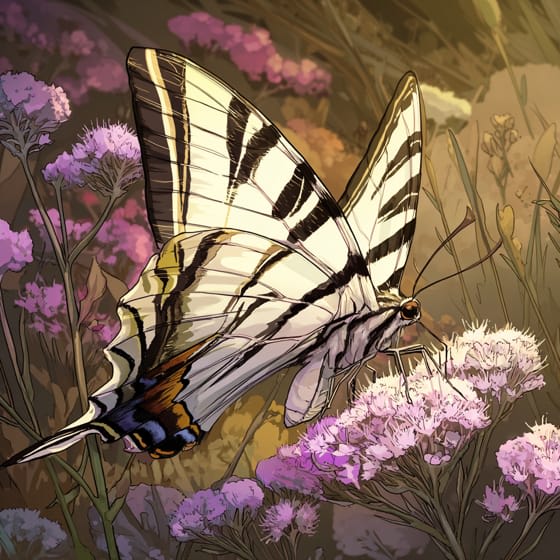





Zebra Swallowtail
Eurytides marcellus
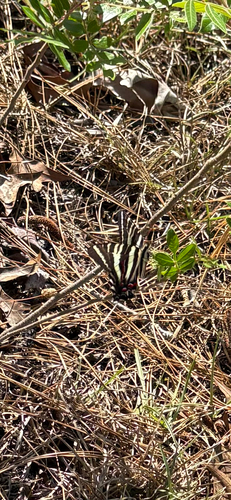
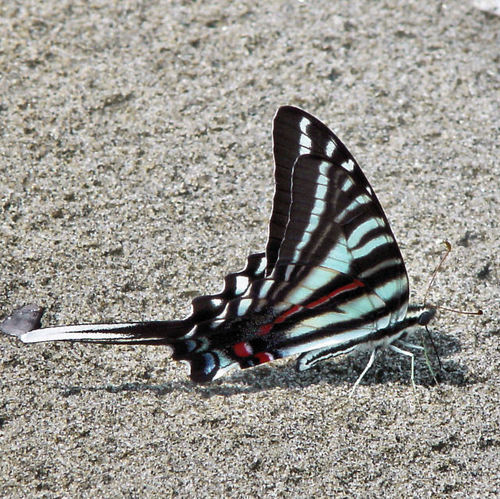
The Zebra Swallowtail is a beautiful butterfly with black and white stripes. It flutters gracefully around gardens and forests, making it a delightful sight for everyone!
Habitat: Forests
The Zebra Swallowtail has striking creamy-white to pale greenish wings adorned with bold black stripes, resembling a zebra. Its hindwings feature distinctive long, slender tails and small patches of blue and red, making it easily recognizable among butterflies.
Category
InsectsRarity
Common
Danger
1/5 · Very low
Snaps
64
Baby zebra swallowtails (caterpillars) can be green or striped, completely changing their look!
Its stripes aren't just for show; they help it blend into dappled sunlight!
Summer Zebra Swallowtails often have shorter tails than those born in the spring!
They are fantastic 'pollen taxis,' helping many wildflowers grow by carrying pollen!
Zebra Swallowtail caterpillars have a super defense shield because eating pawpaw leaves makes them taste bad to predators.
Zebra Swallowtail caterpillars are picky, munching only on pawpaw leaves, giving them a unique, specialized food source.
Zebra Swallowtail can zip through the air with quick, darting movements that help them swiftly escape from predators.
Zebra Swallowtail has long, elegant tails that might trick predators into attacking the wrong part, helping them escape.
Adults sip sweet flower nectar, while their caterpillars are picky eaters, only munching on pawpaw leaves!
Age differences: Yes, caterpillars eat pawpaw leaves, but adult butterflies only drink nectar.
Asimina triloba
Its caterpillars feed exclusively on the leaves of this tree.

Asclepias syriaca
Adult butterflies visit its flowers for nectar, helping pollination.

Trifolium pratense
Nectar from this flower provides essential energy for adults.
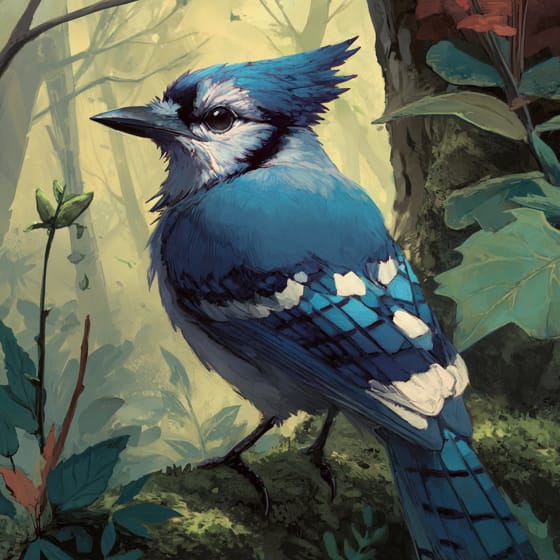
Cyanocitta cristata
Butterflies and caterpillars are a food source for this bird.
Marked with parallel bands or lines of color.
Colorful describes organisms or objects displaying a wide range of bright and distinct colors.
This trait characterizes organisms whose diet consists entirely or primarily of plant material.
Describes plants that are particularly attractive and beneficial to a wide range of pollinating organisms.

Forest habitats are terrestrial environments dominated by dense tree cover, supporting a high diversity of plant and animal life.

Diurnal animals are primarily active during daylight hours, typically resting or sleeping at night.

Migratory animals undertake seasonal movements from one region to another, typically in response to changes in climate or food availability.

Describes organisms that transfer pollen, enabling the fertilization and reproduction of plants.
Danger
1/5 · Very low
Butterflies are safe to watch, but remember not to touch them as they are delicate.
The easiest way to identify Zebra Swallowtail is to use the Snappit nature identifier app.
60-100 mm
45-65 mm
10-14 days
15-30 km/h
Adults sip sweet flower nectar, while their caterpillars are picky eaters, only munching on pawpaw leaves!
Forests
Foraging
Zoom in to split clusters and explore where this object has been snapped.
Apr 21, 2026
Morningside Nature CenterPhoto attribution
(c) Emily Geest, some rights reserved (CC BY)
License: CC BY 4.0 ↗
Image may be shown cropped inside the card frame.
Apr 21, 2026
Morningside Nature CenterPhoto attribution
(c) Emily Geest, some rights reserved (CC BY)
License: CC BY 4.0 ↗
Image may be shown cropped inside the card frame.
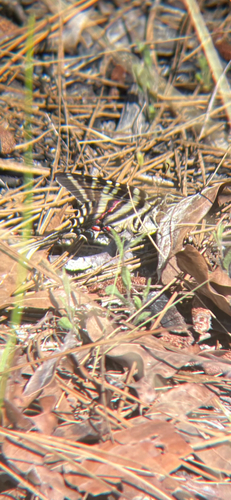
Sep 10, 2006
Hale Avenue Historic DistrictPhoto attribution
(c) Gordon C. Snelling, some rights reserved (CC BY)
License: CC BY 4.0 ↗
Image may be shown cropped inside the card frame.

Virginia, US
You might spot Cope's Gray Tree Frog and Basilica Orbweaver.
View guide →

Maryland, US
You might spot Crane-Fly Orchid, Fragile Forktail, and Ebony Jewelwing.
View guide →

Virginia, US
You might spot Pharaoh Cicada, Lesser Celandine, and Eastern Box Turtle.
View guide →

Virginia, US
You might spot Spotted Lanternfly and Northern Cardinal.
View guide →

Maryland, US
You might spot Osprey, Duck, and Spotted Lanternfly.
View guide →
Maryland, US
You might spot Duck, American Toad, and Eastern Bluebird.
View guide →
Take the discovery with you
Snap it with Snappit to identify it, learn what makes it special, and add the discovery to your collection.









.jpg&width=800)


