




Purple Tulip
Tulipa L.
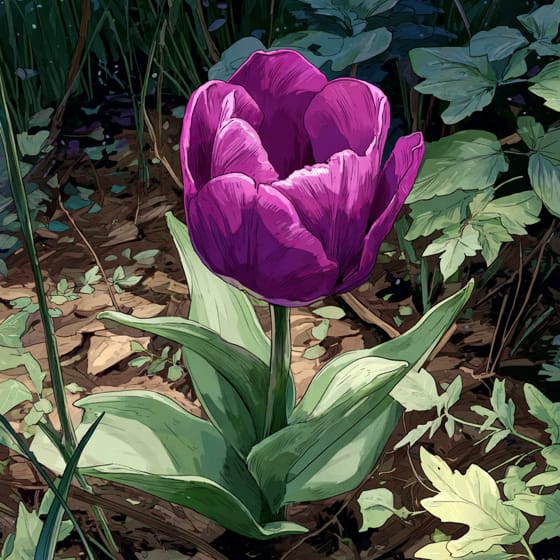
The Purple Tulip is a royal-looking flower that brings elegance to gardens! It blooms beautifully in the springtime.
Habitat: Gardens and parks
The Purple Tulip boasts rich, deep violet petals, often with subtle darker veins, forming a classic cup-shaped bloom. Its vibrant color makes it a standout feature in any spring garden. This striking flower sits atop a single, sturdy green stem.
Category
PlantsRarity
Common
Danger
1/5 · Very low
Snaps
Be the first to snap!
Each individual tulip flower typically blooms for only about one to two weeks.
Some tulip varieties can slightly change their petal color based on soil conditions!
Tulips were once so valuable they caused an economic bubble called 'Tulip Mania'!
Wild tulips originated in the mountains of Central Asia, not the Netherlands.
Purple Tulips can turn their flowers to follow the sun, helping them absorb more light and energy for growth.
Purple Tulips have underground bulbs that store energy, allowing them to survive cold winters and re-emerge in spring.
Purple Tulips produce many tiny seeds inside their dried flower, helping them spread to new locations.
Apis mellifera
Attracted to nectar and pollen
Bombus impatiens
Efficiently transfers pollen between flowers
Myzus persicae
Sucks sap from leaves and stems
Helix aspersa
Feeds on leaves and flower petals
Flowering plants are any plants that produce flowers as part of their reproductive cycle.
Ornamental plants are cultivated primarily for their aesthetic appeal, enhancing landscapes and gardens with their attractive foliage, flowers, or form.
Shade tolerant plants are adapted to grow and thrive in areas with low light levels, requiring less direct sunlight.
Spring blooming plants produce their flowers during the spring season, often signifying the end of winter and the start of new growth.

Fragrant flowers emit a pleasant aroma, often to attract pollinators or for defense.

This habitat trait indicates species that can coexist with humans in urban and suburban environments, utilizing man-made structures and green spaces.
Danger
1/5 · Very low
Explore with care and ask an adult if you’re unsure what to do.
30-60 cm
10-15 cm
5-10 cm
Spring
No
Mild
Perennial
Insect
Zoom in to split clusters and explore where this object has been snapped.
Recent snaps will appear here as new observations are added.