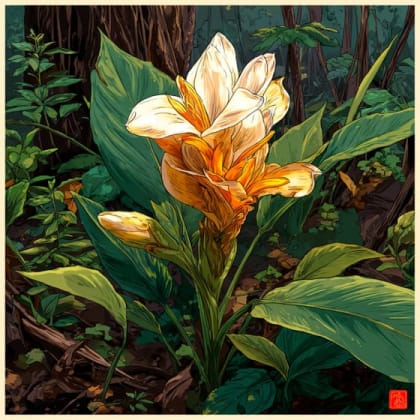




Calendula
Calendula
Calendulas, also known as pot marigolds, are cheerful flowers with bright orange and yellow petals! They bloom in spring and summer.
Habitat: Gardens and sunny areas
The Calendula has vibrant orange or yellow daisy-like flowers with many petals radiating from a central disk. Its simple, oblong leaves are slightly hairy and grow on sturdy, branching stems, often forming a bushy mound.
Category
PlantsRarity
Common
Danger
1/5 · Very low
Snaps
Be the first to snap!
Ancient Egyptians thought calendula had magical rejuvenating powers!
It's called 'pot marigold' because it was often grown in cooking pots!
Some people say calendula flowers can predict rain if they stay closed in the morning!
You can eat its petals, adding a pop of color and mild flavor to salads!
Calendula can turn its flowers to follow the sun, maximizing sunlight absorption for growth.
Calendula has unique curved seeds that easily disperse, helping new plants grow without human help.
Calendula contains special compounds that help soothe skin irritation and support natural healing.
Apis mellifera
visits flowers for nectar and pollen
Vanessa cardui
attracted to bright blooms for nectar
Aphis fabae
can infest leaves and stems
Helix aspersa
may graze on young leaves
Annual plants complete their entire life cycle, from germination to seed production, within a single growing season.
Spring blooming plants produce their flowers during the spring season, often signifying the end of winter and the start of new growth.
Fragrant flowers emit a pleasant aroma, often to attract pollinators or for defense.
Medicinal plants possess chemical compounds that can be used for therapeutic purposes to treat illnesses or maintain health.

This habitat trait indicates species that can coexist with humans in urban and suburban environments, utilizing man-made structures and green spaces.
Danger
1/5 · Very low
Explore with care and ask an adult if you’re unsure what to do.
30-60 cm
30-45 cm
5-10 cm
Spring to fall
Yes
None
Annual
Insect
Zoom in to split clusters and explore where this object has been snapped.
Recent snaps will appear here as new observations are added.