





Passion Flower
Passiflora incarnata
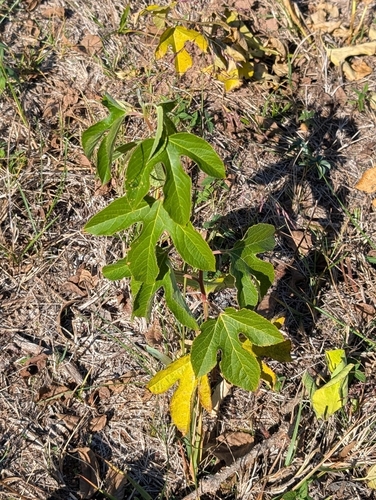
Passion Flower has fascinating flowers that look like they have many layers! They can be purple or white and are often found climbing on trellises.
Habitat: Tropical and subtropical areas
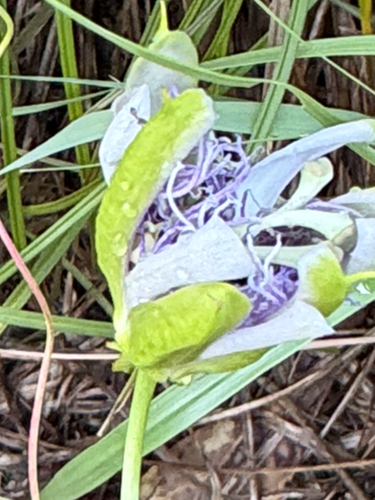
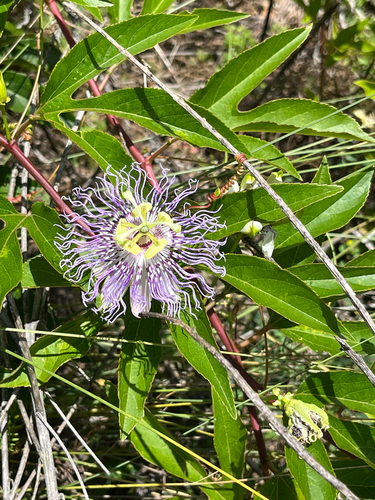
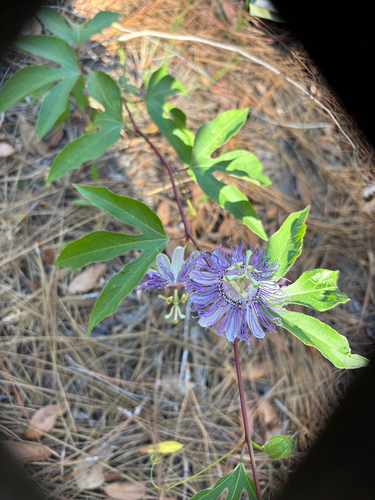
The Passion Flower has strikingly intricate blooms with vibrant petals often in shades of white, purple, or blue. A distinctive fringed crown of filaments sits above the petals, surrounding the central reproductive parts, making it look unlike any other flower.
Category
PlantsRarity
Rare
Danger
1/5 · Very low
Snaps
40
Certain types of passion flowers can grow over 30 feet long, like a super climber!
Its fruit, passionfruit, provides Vitamin C and is super tasty!
Some species bloom only for one day, showing their beauty quickly!
The name 'Passion Flower' honors religious symbols, not romantic feelings!
Passion Flower can climb high using special tendrils that help it grasp onto supports to reach sunlight.
Passion Flower has special glands that produce sugary nectar, attracting ants which defend the plant from herbivores.
Passion Flower can deter some butterflies from laying eggs by having spots on its leaves that mimic existing eggs.
Apis mellifera
Gathers nectar and pollen for its colony.
Heliconius charithonia
Its caterpillars feed on the leaves.

Archilochus colubris
Sips nectar from long-tubed flowers.

Artibeus jamaicensis
Feeds on nectar and carries pollen.
Climbing or vine plants are characterized by a growth habit that allows them to ascend upwards by twining, tendrils, or adhesive roots.
Evergreen plants retain their foliage throughout the year, never shedding all their leaves at once.
Fragrant flowers emit a pleasant aroma, often to attract pollinators or for defense.
Fruit-bearing plants produce fruits, which are the mature ovaries of flowering plants containing seeds.
Danger
1/5 · Very low
Explore with care and ask an adult if you’re unsure what to do.
The easiest way to identify Passion Flower is to use the Snappit nature identifier app.
300-900 cm
100-300 cm
5-10 cm
Summer to Fall
Yes
Mild
Perennial
Zoom in to split clusters and explore where this object has been snapped.
Jun 15, 2026
Columbia Historic District IPhoto attribution
no rights reserved
License: CC0 1.0 ↗
Image may be shown cropped inside the card frame.
May 5, 2026
Flint RiverQuariumPhoto attribution
(c) Lexa, some rights reserved (CC BY)
License: CC BY 4.0 ↗
Image may be shown cropped inside the card frame.
Apr 21, 2026
Morningside Nature CenterPhoto attribution
(c) Emily Geest, some rights reserved (CC BY)
License: CC BY 4.0 ↗
Image may be shown cropped inside the card frame.
Oct 26, 2024
Nathan and Olive Boone Homestead State Historic SitePhoto attribution
(c) Conway Hawn, some rights reserved (CC BY)
License: CC BY 4.0 ↗
Image may be shown cropped inside the card frame.

South Carolina, US
You might spot American Alligator, Anole, and Great Blue Heron.
View guide →
Alabama, US
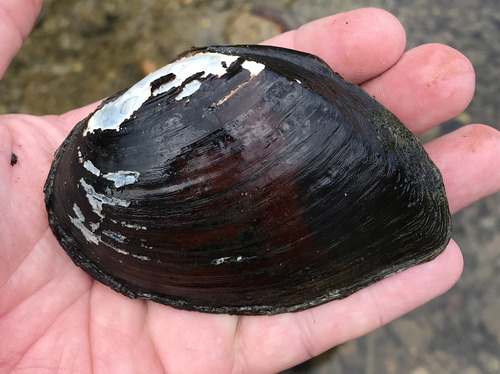
You might spot Elephantear, Three-Ridge Mussel, and Rough Fatmucket.
View guide →

North Carolina, US
You might spot Northern Cardinal, Carolina Wren, and Tufted Titmouse.
View guide →

South Carolina, US
You might spot Brown Pelican, Boat-Tailed Grackle, and Great Egret.
View guide →

South Carolina, US
You might spot Anole, Asian Lady Beetle, and Gulf Fritillary.
View guide →

Alabama, US
You might spot Anole, Bee, and Bristle Thistle.
View guide →
Take the discovery with you
Snap it with Snappit to identify it, learn what makes it special, and add the discovery to your collection.











.jpg&width=800)


_001.jpg&width=800)



