Chimpanzee
Pan troglodytes
Chimpanzees are intelligent primates that share 98% of our DNA.
Habitat: African forests and savannas.
The Chimpanzee has shaggy black hair covering most of its body, with bare faces, ears, palms, and soles. Their faces can range from pink to dark brown, often darkening with age. They are distinguished from other great apes by their more slender build and prominent brow ridge.
Category
MammalsRarity
Common
Danger
4/5 · High
Snaps
Be the first to snap!
A chimpanzee's DNA is astonishingly 98% identical to a human's DNA!
Chimpanzees build a fresh, leafy sleeping nest high in a tree every single night!
They can recognize themselves in a mirror, showing they understand self-awareness.
They greet each other with hugs, kisses, and handshakes, much like humans do.
Chimpanzee can use twigs to 'fish' for termites because this helps them access food hidden in crevices.
Chimpanzee has a complex vocal repertoire, including hoots and screams, that helps them coordinate group activities.
Chimpanzee can solve complex puzzles and learn new tasks quickly because of their high intelligence.
Chimpanzees are omnivores, eating mostly fruits but also leaves, insects, and even small animals.
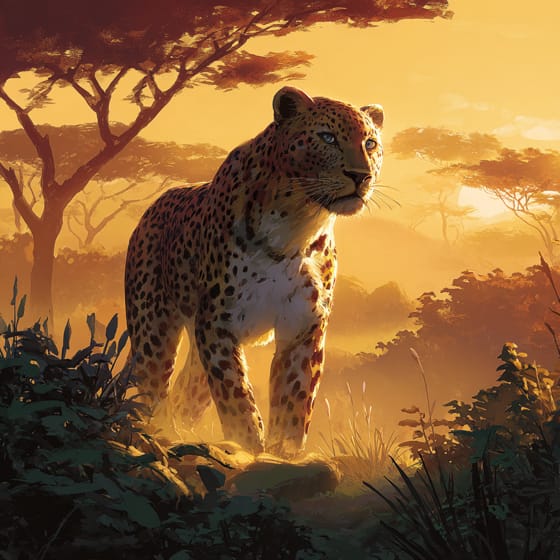
Panthera pardus
Leopards are a primary predator of chimpanzees, especially the young.
Ficus exasperata
Chimpanzees frequently consume the fruits and leaves of fig trees.
Cercopithecus ascanius
Chimpanzees hunt red-tailed monkeys for meat, often cooperatively.
Macrotermes bellicosus
Chimpanzees use stick tools to extract these termites from their mounds.
Wildlife encompasses all undomesticated animal and plant life existing in their natural habitats.
Furry describes animals possessing a dense covering of soft hair or fur.
Social animals live in organized groups, cooperating for survival benefits such as foraging, defense, and raising offspring.
This trait identifies organisms whose diet includes both plant and animal matter.

Arboreal animals live primarily in trees, utilizing them for shelter, food, and protection from predators.

This trait describes organisms that manipulate external objects to achieve a specific goal.

This habitat trait refers to species found in tropical rainforests, characterized by high annual rainfall, high biodiversity, and dense tree cover.
Danger
4/5 · High
Strong and unpredictable — can be dangerous.
70-150 cm
27-70 kg
30-50 years
40 km/h
Chimpanzees are omnivores, eating mostly fruits but also leaves, insects, and even small animals.
African forests and savannas.
Foraging
1
Zoom in to split clusters and explore where this object has been snapped.
Recent snaps will appear here as new observations are added.

Tennessee, US
You might spot Komodo Dragon, Western Barn Owl, and Snow Leopard.
View guide →

Michigan, US
You might spot African Lion, Komodo Dragon, and Brown Bear.
View guide →
Arkansas, US
You might spot African Lion, Red Fox, and Common Ostrich.
View guide →
New Mexico, US
You might spot African Lion, Cheetahs, and Hippopotamus.
View guide →

California, US
You might spot Four-Toed Hedgehog, Military Macaw, and Green Tree Python.
View guide →
Tennessee, US
You might spot African Lion, Giraffes, and White Stork.
View guide →