Blackpoll Warbler
Setophaga striata
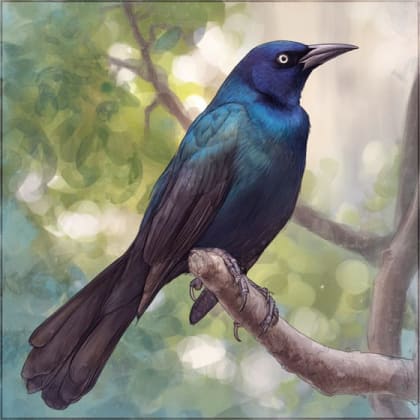
The Blackpoll Warbler is a small bird with black streaks on its sides and a white throat. It travels thousands of miles each year during migration, crossing the Atlantic Ocean to reach its nesting grounds in the northern forests.
Habitat: Forests
The Blackpoll Warbler has a striking black cap and bold white cheeks. Its white underparts are heavily streaked with black, especially on the flanks. Its gray back also has black streaks, and its wings show two distinct white bars.
Category
BirdsRarity
Common
Danger
1/5 · Very low
Snaps
1
Before their long migration, Blackpolls can eat enough to nearly double their body weight in fat!
Blackpoll Warblers nest in cold northern boreal forests, often building their nests close to the ground.
Their incredibly high-pitched song is often difficult for older humans to hear!
They often fly at altitudes of over 2,000 meters (6,500 feet) during their incredible oceanic journeys!
Blackpoll Warbler can fly thousands of kilometers non-stop over the ocean, thanks to incredible endurance and fat reserves.
Blackpoll Warbler can nearly double its body weight in fat before migration, fueling its epic long-distance journey.
Blackpoll Warbler has agile acrobatic moves that help them glean tiny insects and spiders from tree leaves and branches.
Tiny insectivores, they munch on caterpillars, spiders, and other small bugs.
Accipiter striatus
A common predator of small songbirds.
Malacosoma disstria
Eats these defoliating caterpillars in summer.
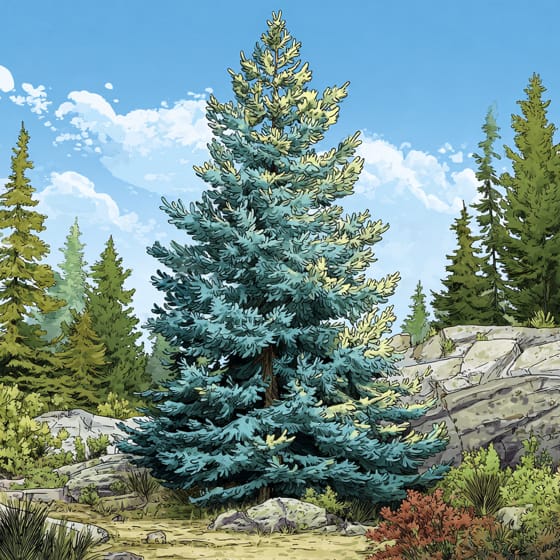
Picea glauca
Nests are often built in the dense branches of this tree.
Wildlife encompasses all undomesticated animal and plant life existing in their natural habitats.
Feathered describes animals, primarily birds, possessing a covering of feathers.
Singing animals produce complex vocalizations, often for purposes of attracting mates, defending territory, or communicating within their species.
This trait identifies organisms whose diet primarily consists of insects and other small invertebrates.

Forest habitats are terrestrial environments dominated by dense tree cover, supporting a high diversity of plant and animal life.

Migratory animals undertake seasonal movements from one region to another, typically in response to changes in climate or food availability.
Danger
1/5 · Very low
Observe these birds from a distance to avoid disturbing their nesting areas.
12-14 cm
20-24 cm
0.01-0.015 kg
3-6 years
40 km/h
Tiny insectivores, they munch on caterpillars, spiders, and other small bugs.
Forests
Foraging
Zoom in to split clusters and explore where this object has been snapped.