Lady's Smock
Cardamine pratensis
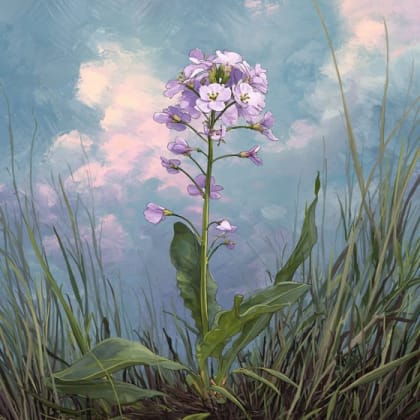
Lady's Smock has delicate white flowers that look like little stars! They bloom in spring and are often found in meadows.
Habitat: Wet meadows
The Lady's Smock has delicate, four-petaled flowers, usually a pale lilac-purple or pink, sometimes white, forming loose clusters. Its deeply lobed leaves give it a distinctive lacy appearance, differentiating it from many simple-leaved wildflowers.
Category
PlantsRarity
Common
Danger
1/5 · Very low
Snaps
1
It's nicknamed 'Cuckoo Flower' because it blooms when the cuckoo birds start to sing!
Its peppery leaves and flowers are delicious and edible, tasting like cress!
Lady's Smock was once used to treat scurvy, thanks to its Vitamin C!
Some people believed that bringing Lady's Smock indoors would attract lightning!
Lady's Smock has roots that thrive in waterlogged soils, helping it survive in very wet meadows.
Lady's Smock has a spicy, peppery taste from mustard oils, helping to deter some hungry animals.
Anthocharis cardamines
Larvae feed on the plant.
Apis mellifera
Collects nectar and pollen.
Bombus terrestris
Visits flowers for nectar.
Spring blooming plants produce their flowers during the spring season, often signifying the end of winter and the start of new growth.
Edible plants are those parts of a plant that are considered safe for human consumption.
This habitat trait identifies species found in wetlands, which are areas of land saturated with water, either permanently or seasonally, including marshes, swamps, and bogs.
Describes organisms that transfer pollen, enabling the fertilization and reproduction of plants.
Danger
1/5 · Very low
Explore with care and ask an adult if you’re unsure what to do.
20-60 cm
15-40 cm
1-2 cm
Spring
Yes
None
Perennial
Insect
Zoom in to split clusters and explore where this object has been snapped.