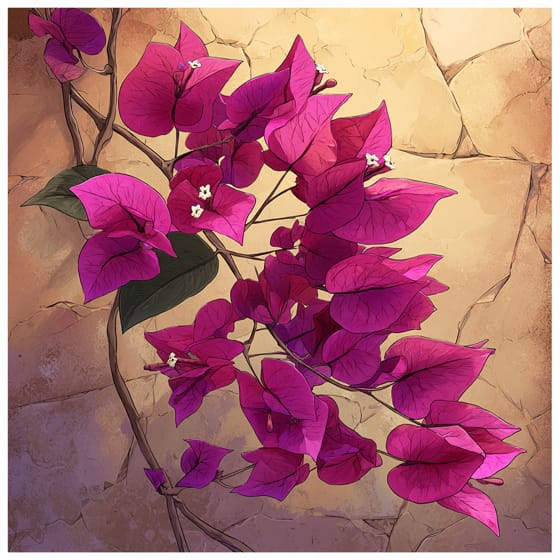





bougainvilleas
Bougainvillea
Bougainvilleas are colorful flowers that bloom in bright shades of pink, purple, and orange. They grow on climbing vines and can make gardens look beautiful and cheerful!
Habitat: Urban areas
The bougainvilleas has vibrant, papery 'flowers' that come in dazzling shades of purple, pink, red, orange, and white. These colorful parts are actually modified leaves called bracts, which surround a small, cream-colored true flower, making it visually distinct from many other flowering plants.
Category
PlantsRarity
Common
Danger
2/5 · Low
Snaps
Be the first to snap!
Bougainvilleas can live for many decades, some even over a hundred years old!
Its colorful 'petals' are actually special leaves, much like a protective, showy disguise!
Some types of bougainvillea can be pruned and shaped into unique bonsai trees!
The first bougainvillea was discovered in Brazil in 1768 by a French botanist!
Bougainvilleas can grow long, thorny stems that help it climb high to reach sunlight, acting like a natural ladder.
Bougainvilleas has adapted to dry conditions by needing very little water once established, helping it survive arid spells.
Bougainvilleas possess sharp thorns along its stems that deter hungry animals from nibbling its leaves and shoots.
Bougainvilleas uses its brilliant, colorful bracts to attract bees and hummingbirds, guiding them to its tiny true flowers.
Apis mellifera
Bees visit tiny flowers for nectar and pollen.

Archilochus colubris
Hummingbirds are attracted to colorful bracts.
Spodoptera litura
Larvae can occasionally feed on the leaves.
Flowering plants are any plants that produce flowers as part of their reproductive cycle.
A shrub is a woody plant smaller than a tree, typically with multiple stems branching from or near the ground.
Evergreen plants retain their foliage throughout the year, never shedding all their leaves at once.
Colorful describes organisms or objects displaying a wide range of bright and distinct colors.

Describes plants that are particularly attractive and beneficial to a wide range of pollinating organisms.

Rapid growing plants exhibit accelerated growth rates, quickly increasing in size and biomass within a short period.

Domesticated refers to species that have been selectively bred and tamed by humans for specific purposes.

This habitat trait indicates species that can coexist with humans in urban and suburban environments, utilizing man-made structures and green spaces.
Danger
2/5 · Low
Bougainvilleas have thorns, so be careful not to touch the stems.
The easiest way to identify bougainvilleas is to use the Snappit nature identifier app.
50-1200 cm
50-600 cm
0.5-1 cm
Year-round in tropical climates; summer and fall in temperate zones
No
Mild
Perennial
Zoom in to split clusters and explore where this object has been snapped.
Recent snaps will appear here as new observations are added.
Take the discovery with you
Snap it with Snappit to identify it, learn what makes it special, and add the discovery to your collection.










.jpg&width=800)



_001.jpg&width=800)



