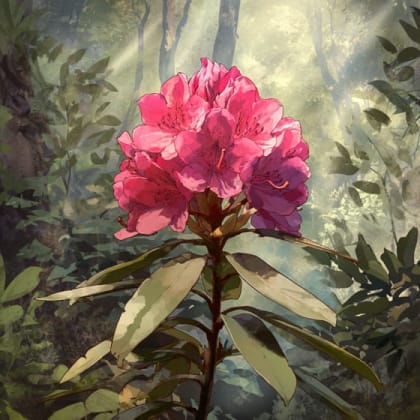


Croton Bush
Haemodracon trachyrhinus
Croton Bushes are colorful plants with leaves that look like they were painted! They can have yellow, orange, red, and green leaves.
Habitat: Tropical regions and gardens
The Croton Bush is renowned for its spectacularly colourful, leathery leaves, which display vibrant patterns of red, orange, yellow, and green. These glossy leaves come in diverse shapes, from narrow and twisted to broad and lobed, making each plant visually striking and unique.
Category
PlantsRarity
Rare
Danger
1/5 · Very low
Snaps
Be the first to snap!
Ancient people sometimes used croton leaves for medicine.
Crotons are related to the plant that gives us rubber!
Its bright colors are actually hidden pigments under green!
Some croton leaves look like they're dripping paint, amazing!
Croton Bush can change the intensity and pattern of its leaf colours, helping it adapt to varying light conditions and deter herbivores.
Croton Bush has a milky, toxic sap that helps it defend against hungry insects and animals by causing irritation if ingested.
Croton Bush has specialized leaf cells that produce a vibrant array of pigments, allowing it to efficiently capture diverse light spectrums for energy.
Hypena lividalis
Larvae feed on leaves, sometimes causing damage.
Aphis gossypii
Tiny insects suck sap from leaves and stems.
Apis mellifera
Visits small flowers to collect nectar and pollen.
Ornamental plants are cultivated primarily for their aesthetic appeal, enhancing landscapes and gardens with their attractive foliage, flowers, or form.
A shrub is a woody plant smaller than a tree, typically with multiple stems branching from or near the ground.
Pertaining to plants with leaves or petals exhibiting different colors in patches or stripes.
Evergreen plants retain their foliage throughout the year, never shedding all their leaves at once.

Colorful describes organisms or objects displaying a wide range of bright and distinct colors.

Rapid growing plants exhibit accelerated growth rates, quickly increasing in size and biomass within a short period.
No aliases listed yet.
Danger
1/5 · Very low
Explore with care and ask an adult if you’re unsure what to do.
60-250 cm
40-150 cm
0.5-1.5 cm
Year-round
No
Moderate
Perennial
Insect
Zoom in to split clusters and explore where this object has been snapped.
Recent snaps will appear here as new observations are added.