



Wildebeest
Connochaetes taurinus
Wildebeests are large African mammals with dark fur and curved horns. They travel in big groups during migrations across the savannas, grazing on grass and staying alert for predators like lions.
Habitat: Savannas
The Wildebeest has a stocky body with a large head, shaggy black mane, and a beard. Its coat is usually brownish-grey with dark vertical stripes on its neck. Both males and females have unique, curved horns that point outwards then upwards, setting them apart.
Category
MammalsRarity
Common
Danger
2/5 · Low
Snaps
Be the first to snap!
A group of wildebeest is called a 'herd' or sometimes a 'confusion'!
During their huge migration, wildebeest can cross crocodile-filled rivers, showing amazing bravery!
Their huge curved horns aren't just for show; they use them to fight rivals!
They are like natural lawnmowers, constantly eating grass which helps new plants grow.
Wildebeest can travel thousands of miles because of their strong legs, helping them find fresh grass and water.
Wildebeest has safety in numbers, protecting themselves from predators by confusing attackers in big herds.
Wildebeest can constantly graze, which helps trim and fertilize the savanna grasses for other animals.
Wildebeest are hungry grazers, eating vast amounts of grass to keep the savanna ecosystem healthy.
Age differences: Calves drink mother's milk for several months before switching entirely to grazing on grasses.
Panthera leo
Lions hunt wildebeest to survive, keeping herds strong.
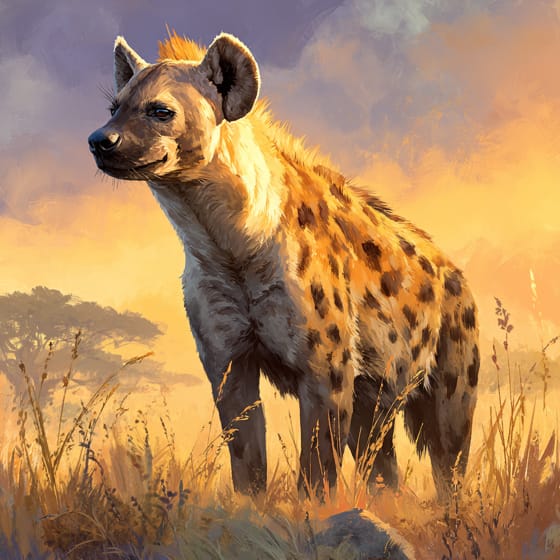
Crocuta crocuta
Hyenas target young or weak wildebeest in their hunting packs.
Lycaon pictus
African wild dogs are skilled hunters of wildebeest.
Equus quagga
Zebras graze alongside wildebeest, eating different grass parts.
Social animals live in organized groups, cooperating for survival benefits such as foraging, defense, and raising offspring.
Characterized by having one or more hard, permanent, pointed projections on the head.
Grassland habitats are terrestrial biomes dominated by grasses and herbaceous plants, supporting a variety of grazing animals.
This trait characterizes organisms whose diet consists entirely or primarily of plant material.

Thermoregulating organisms maintain a stable internal body temperature despite fluctuations in the external environment.

This trait describes organisms that manipulate external objects to achieve a specific goal.

This habitat trait denotes species native to savannas, which are grasslands with scattered trees, typically found in tropical or subtropical regions with distinct wet and dry seasons.

Describes a species whose presence and role have a disproportionately large effect on its environment.

Migratory animals undertake seasonal movements from one region to another, typically in response to changes in climate or food availability.

Nocturnal animals are primarily active during the nighttime hours, typically resting or sleeping during the day.
Danger
2/5 · Low
Always observe wildebeests from a safe distance in the wild and never try to approach them.
150-240 cm
120-270 kg
15-20 years
80 km/h
Wildebeest are hungry grazers, eating vast amounts of grass to keep the savanna ecosystem healthy.
Savannas
Grazing
1
Zoom in to split clusters and explore where this object has been snapped.
Recent snaps will appear here as new observations are added.