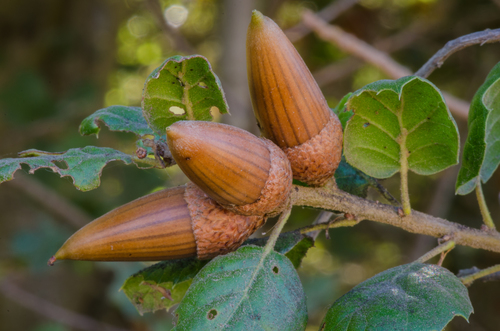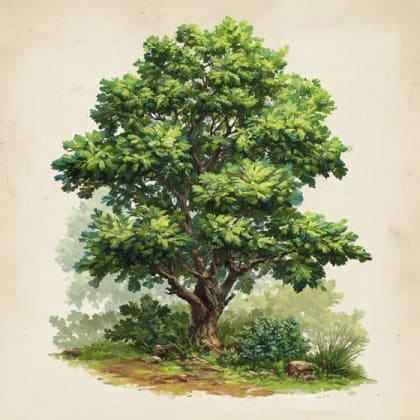

Almond Tree
Prunus agrestis Jord. & Fourr.
The Almond Tree is a beautiful tree that produces sweet almonds. Almonds are a nutritious snack and can also be made into almond milk!
Habitat: Warm, sunny areas
The Almond Tree is a small, bushy deciduous shrub or tree, usually growing only a few meters tall. It has delicate pinkish-white flowers in early spring, followed by fuzzy green fruits that contain a hard shell and a bitter, inedible seed.
Category
TreesRarity
Common
Danger
1/5 · Very low
Snaps
Be the first to snap!
Ancient people sometimes used its strong, flexible branches to make tools!
Its tiny flowers are among the very first blossoms to appear in spring!
This hardy tree can amazingly grow even on very steep, stony hillsides!
Wild almond seeds contain a natural chemical that tastes super bitter!
Almond Tree has bitter compounds in its seeds that help it defend against animals trying to eat its precious offspring.
Almond Tree can thrive in dry, rocky soils because it has deep roots that help it find precious water underground.
Almond Tree can bloom very early in spring, giving its flowers a head start to attract pollinators.
Apis mellifera
Its flowers rely on these bees.
Capra aegagrus
Goats browse its leaves and shoots.
Monilinia laxa
Causes disease in its flowers and fruit.
Rhizophagus irregularis
Helps its roots absorb nutrients.
Deciduous plants periodically shed all their leaves, typically during autumn or dry seasons.
Spring blooming plants produce their flowers during the spring season, often signifying the end of winter and the start of new growth.
Fragrant flowers emit a pleasant aroma, often to attract pollinators or for defense.
Nut bearing plants produce hard-shelled fruits, commonly known as nuts, which contain a single seed and are a valuable food source.
A fruit tree is a perennial tree that produces fruit, which is edible to humans or animals.

Edible plants are those parts of a plant that are considered safe for human consumption.

This trait characterizes organisms with an exceptionally long lifespan compared to others of their kind.
Danger
1/5 · Very low
Do not pick or eat anything you find. Some plants and mushrooms can be harmful.
1-3 m
1-2.5 m
No
5-15 cm
15-30 years
Warm, sunny areas
Drupe
Medium
Zoom in to split clusters and explore where this object has been snapped.
Recent snaps will appear here as new observations are added.