

Sweet Chestnut
Castanea sativa
The Sweet Chestnut tree has spiky shells that hold yummy nuts inside. It’s a fun tree to discover in the fall!
Habitat: Woodlands and parks
The Sweet Chestnut is a stately deciduous tree known for its deeply ridged, spiraling bark and large, elongated, toothed leaves. Its distinct spiky green burrs turn brown in autumn, revealing glossy, reddish-brown nuts.
Category
TreesRarity
Common
Danger
1/5 · Very low
Snaps
5
Ancient Roman soldiers carried sweet chestnut flour as emergency rations!
Its spiky burrs protect the yummy nuts until they are perfectly ripe and fall!
Some Sweet Chestnut trees are over 1,000 years old, watching centuries pass by!
Sweet Chestnut wood is naturally rot-resistant, making it great for outdoor uses!
Sweet Chestnut has tough, spiky burrs that protect its delicious nuts from hungry animals until they are ripe and ready to be dispersed.
Sweet Chestnut can live for hundreds of years, allowing it to grow very large and become a vital part of the forest ecosystem for generations.
Sweet Chestnut's extensive root system efficiently draws water and nutrients from the soil, helping it thrive and produce abundant fruit.

Homo sapiens
Harvests and consumes the edible nuts.
Sciurus vulgaris
Feeds on the nutritious nuts in autumn.
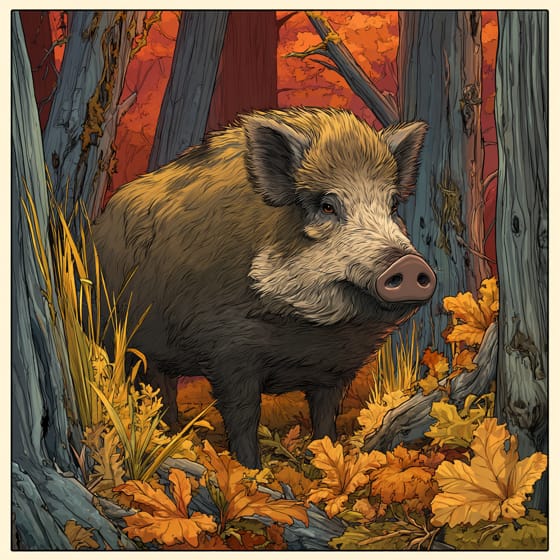
Sus scrofa
Forages for fallen nuts on the forest floor.
Cryphonectria parasitica
A fungus that causes destructive cankers on the tree.
Deciduous plants periodically shed all their leaves, typically during autumn or dry seasons.
Broadleaf trees are angiosperms characterized by flat, wide leaves that are typically shed annually in temperate climates.
Nut bearing plants produce hard-shelled fruits, commonly known as nuts, which contain a single seed and are a valuable food source.
A fruit tree is a perennial tree that produces fruit, which is edible to humans or animals.

Edible plants are those parts of a plant that are considered safe for human consumption.

Rapid growing plants exhibit accelerated growth rates, quickly increasing in size and biomass within a short period.

Forest habitats are terrestrial environments dominated by dense tree cover, supporting a high diversity of plant and animal life.
Danger
1/5 · Very low
Do not pick or eat anything you find. Some plants and mushrooms can be harmful.
The easiest way to identify Sweet Chestnut is to use the Snappit nature identifier app.
20-35 m
15-25 m
Yes
100-400 cm
200-1000 years
Woodlands and parks
Nut
Zoom in to split clusters and explore where this object has been snapped.
Take the discovery with you
Snap it with Snappit to identify it, learn what makes it special, and add the discovery to your collection.





.jpg)