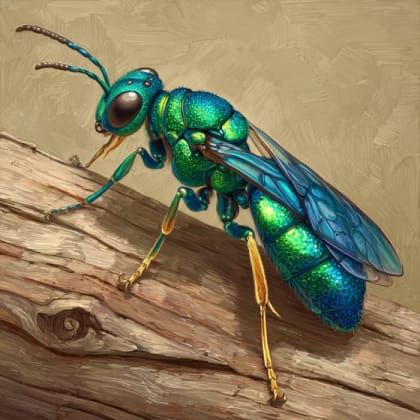
Yellowjacket
Vespula or Dolichovespula
Yellowjackets are a type of wasp that is known for their black and yellow stripes. They can be found at picnics looking for food!
Habitat: Gardens and urban areas
The Yellowjacket is a wasp with a smooth, hairless body, distinctly marked with bright yellow and black bands. It has a very slender waist, clear wings, and prominent antennae. Its vibrant coloring serves as a warning.
Category
InsectsRarity
Common
Danger
3/5 · Moderate
Snaps
Be the first to snap!
A yellowjacket queen starts her entire colony alone after waking from hibernation.
Only female yellowjackets sting; males do not have a stinger!
Some species build their papery nests entirely underground in old rodent burrows.
They get more aggressive in late summer as their colony grows large and food dwindles.
Yellowjacket can release pheromones that alert colony members to threats or food, helping them respond quickly.
Yellowjacket can hunt and paralyze insects with its venom, providing protein for its growing colony.
Yellowjacket can chew wood fibers into a pulp to construct durable, multi-layered underground or aerial nests.
Yellowjackets are omnivores, eating both sugary foods for energy and protein for growth.
Manduca sexta
They hunt caterpillars for protein.
Musca domestica
Yellowjackets prey on various fly species.
Taxidea taxus
Badgers dig up and eat their underground nests.
Wildlife encompasses all undomesticated animal and plant life existing in their natural habitats.
Social animals live in organized groups, cooperating for survival benefits such as foraging, defense, and raising offspring.
This trait identifies organisms whose diet primarily consists of insects and other small invertebrates.
This habitat trait indicates species that can coexist with humans in urban and suburban environments, utilizing man-made structures and green spaces.
Venomous organisms produce toxins that are injected into another animal, typically through a bite or sting.
Danger
3/5 · Moderate
Do not touch or pick up. Some insects sting or bite. Ask an adult for help.
20-30 mm
10-16 mm
14-365 days
20 km/h
Yellowjackets are omnivores, eating both sugary foods for energy and protein for growth.
Gardens and urban areas
Foraging
6
Zoom in to split clusters and explore where this object has been snapped.
Recent snaps will appear here as new observations are added.