




red campion
Silene dioica
Red campion is a pretty flower with bright pink petals that bloom in spring and summer. It loves to grow in meadows and woodlands, adding color to nature's canvas.
Habitat: Woodlands
The red campion has vibrant, rosy-pink flowers with five deeply notched petals that often look like ten. Its stems are hairy and reddish, giving the plant a slightly fuzzy appearance, distinguishing it from other similar pink wildflowers.
Category
PlantsRarity
Common
Danger
1/5 · Very low
Snaps
2
Its 'campion' name likely comes from 'champion,' referring to flowers given to victors.
Look closely! Some plants only have male flowers, while others have only female flowers.
Red campion flowers smell sweetest in the evening to attract night-flying pollinators.
Tiny seeds escape from a capsule that looks like a miniature crown when ripe.
Red campion has separate male and female plants, allowing for diverse genetic mixing that helps it adapt to new environments.
Red campion's stems are covered in fine hairs, acting like a tiny shield that helps protect it from hungry insects.
Red campion flowers offer nectar in the evening too, attracting both day-flying insects and nocturnal moths.
Apis mellifera
Drinks nectar and collects pollen.
Bombus terrestris
Drinks nectar and helps spread pollen.
Hadena bicruris
Visits flowers for nectar, aiding reproduction.
Microbotryum violaceum
Infects the flowers, altering their appearance.
Herbaceous plants are non-woody plants with soft stems that typically die back to the ground at the end of the growing season.
Flowering plants are any plants that produce flowers as part of their reproductive cycle.
Shade tolerant plants are adapted to grow and thrive in areas with low light levels, requiring less direct sunlight.
Spring blooming plants produce their flowers during the spring season, often signifying the end of winter and the start of new growth.

Summer blooming plants produce their flowers during the summer season, often providing vibrant color when many other plants have finished.

Fragrant flowers emit a pleasant aroma, often to attract pollinators or for defense.

Colorful describes organisms or objects displaying a wide range of bright and distinct colors.

Grassland habitats are terrestrial biomes dominated by grasses and herbaceous plants, supporting a variety of grazing animals.

Describes plants that are particularly attractive and beneficial to a wide range of pollinating organisms.

Forest habitats are terrestrial environments dominated by dense tree cover, supporting a high diversity of plant and animal life.
Danger
1/5 · Very low
Always look but don't touch flowers unless a grown-up says it's okay.
30-90 cm
30-50 cm
1.5-2.5 cm
Late spring to late summer
No
Mild
Perennial
Insect
Zoom in to split clusters and explore where this object has been snapped.

England, UK
You might spot Sika Deer, European Robin, and Eurasian Jackdaw.
View guide →
.jpg)
Ústí nad Labem Region, CZ
You might spot Great Spotted Woodpecker and Red-Crested Pochard.
View guide →

Central Denmark Region, DK
You might spot European Toad, Wild Teasel, and Fireweed.
View guide →
England, UK
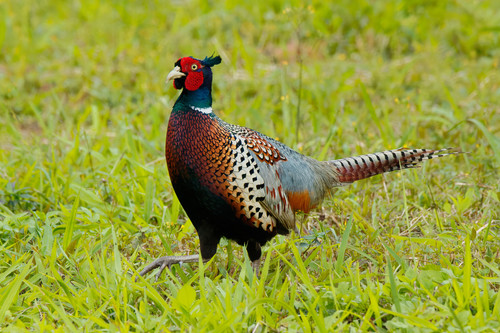
You might spot Ring-Necked Pheasant, Goose, and Eurasian Coot.
View guide →