





Norway spruce
Picea abies
The Norway spruce is a tall tree with long, green needles and cones. It grows in forests and is known for its strong wood, which is used to make many things, including furniture and musical instruments.
Habitat: Forests
The Norway spruce has a classic conical shape with dense, dark green, pointed needles that are stiff and sharp to the touch. Its bark is reddish-brown, flaking in small scales, and it produces large, reddish-brown cones that hang downwards once mature.
Category
PlantsRarity
Common
Danger
1/5 · Very low
Snaps
3
Early European explorers used spruce shoots rich in Vitamin C to prevent scurvy on voyages!
Its strong, lightweight wood is prized for making violins, guitars, and other musical instruments!
Many Christmas trees bought around the world are actually young Norway spruce trees!
The oldest living clonal tree, 'Old Tjikko', is a Norway spruce over 9,550 years old!
Norway spruce has flexible branches that bend under heavy snow, preventing breakage and shedding the snow quickly to avoid damage.
Norway spruce can ooze sticky resin from its bark, acting like a natural bandage to seal wounds and protect against pests and fungi.
Norway spruce has waxy, tough needles that reduce water loss and protect it from freezing damage in harsh winter environments.
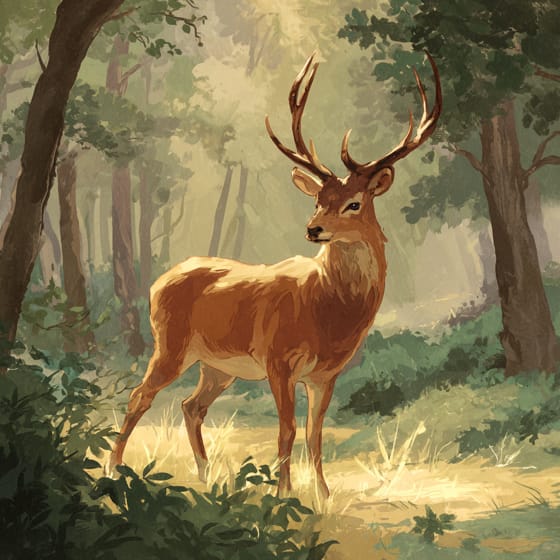
Cervus elaphus
They browse on young shoots and bark, especially in winter.
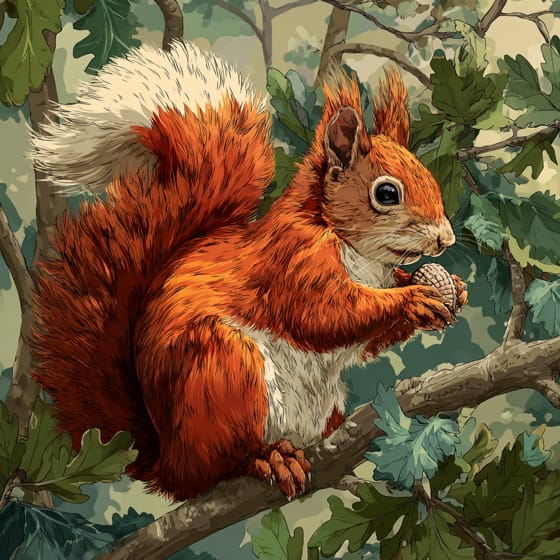
Sciurus vulgaris
Squirrels extract and eat the nutritious seeds from its cones.
Loxia curvirostra
Their unique beaks are perfectly adapted to pry open spruce cones.
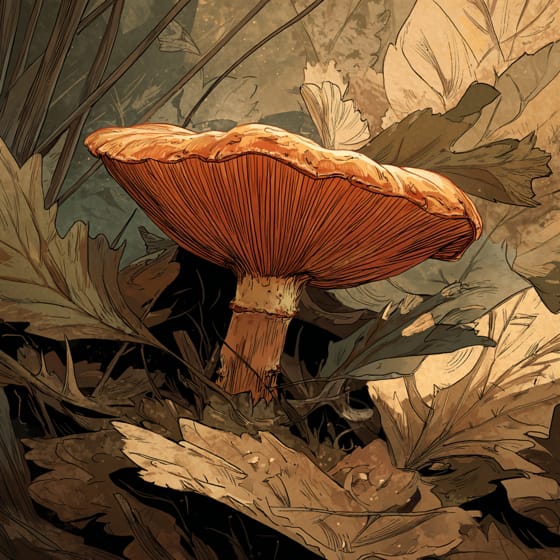
Paxillus involutus
This fungus helps the spruce roots absorb nutrients from the soil.
Cold hardy plants are able to withstand low temperatures and freezing conditions without significant damage.
Coniferous plants are typically evergreen, bearing needles or scales and reproductive cones.
Evergreen plants retain their foliage throughout the year, never shedding all their leaves at once.
Describes plants that are particularly attractive and beneficial to a wide range of pollinating organisms.

Timber refers to wood that has been prepared for use in building and carpentry.

Forest habitats are terrestrial environments dominated by dense tree cover, supporting a high diversity of plant and animal life.

Describes a species whose presence and role have a disproportionately large effect on its environment.

Giant describes organisms or objects of significantly larger size than average for their species or type.
No aliases listed yet.
Danger
1/5 · Very low
Stay away from the sharp needles and cones, and don't climb too high in the trees.
The easiest way to identify Norway spruce is to use the Snappit nature identifier app.
3000-6000 cm
500-800 cm
Spring
Yes
None
Perennial
Wind
Zoom in to split clusters and explore where this object has been snapped.
Take the discovery with you
Snap it with Snappit to identify it, learn what makes it special, and add the discovery to your collection.









.jpg&width=800)



_001.jpg&width=800)



