Blue-tongued Skink
Tiliqua scincoides
The Blue-tongued Skink is known for its bright blue tongue! When it feels threatened, it sticks out its tongue to scare away predators.
Habitat: Grasslands and forests
The Blue-tongued Skink has a large, sturdy body with short limbs and a thick tail. Its skin is covered in smooth, glossy scales, often displaying bands of brown, grey, and cream. The most striking feature is its bright, cobalt-blue tongue.
Category
ReptilesRarity
Common
Danger
2/5 · Low
Snaps
Be the first to snap!
Blue-tongues can flatten their bodies to look bigger and scarier to predators.
These skinks help gardeners by eating slugs and snails.
They are born live, looking like mini adults, not from eggs!
They sometimes bask on roads, so drivers must watch out for them!
Blue-tongued Skink can flash its vibrant blue tongue and hiss loudly to startle predators, making them think it's venomous.
Blue-tongued Skink can drop its tail when caught by a predator, allowing it to escape while the tail wiggles to distract.
Blue-tongued Skink has live birth instead of laying eggs, which helps its babies develop safely inside the mother.
Blue-tongued Skinks are omnivores that enjoy a varied diet of plants and small animals.
Aquila audax
A large bird of prey that can hunt skinks.
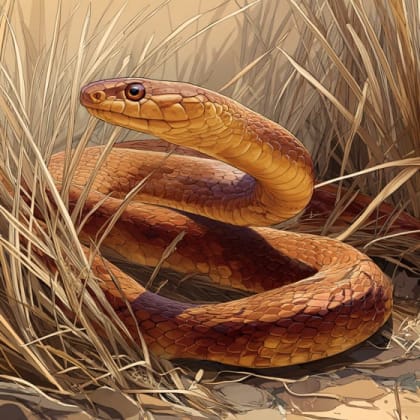
Pseudechis australis
A venomous snake known to prey on lizards.
Helix aspersa
A common garden pest that skinks love to eat.
Tenebrio molitor
A common insect larva that skinks eat.
Wildlife encompasses all undomesticated animal and plant life existing in their natural habitats.
Social animals live in organized groups, cooperating for survival benefits such as foraging, defense, and raising offspring.
This trait identifies organisms whose diet includes both plant and animal matter.
Burrowing animals dig tunnels and chambers in the ground, using these subterranean structures for shelter, hunting, or breeding.

Grassland habitats are terrestrial biomes dominated by grasses and herbaceous plants, supporting a variety of grazing animals.

Forest habitats are terrestrial environments dominated by dense tree cover, supporting a high diversity of plant and animal life.

Nocturnal animals are primarily active during the nighttime hours, typically resting or sleeping during the day.
Danger
2/5 · Low
Look but don’t touch. Keep a safe distance and wash hands after exploring.
45-60 cm
0.5-1.5 kg
15-20 years
12 km/h
Blue-tongued Skinks are omnivores that enjoy a varied diet of plants and small animals.
Grasslands and forests
Foraging
Zoom in to split clusters and explore where this object has been snapped.
Recent snaps will appear here as new observations are added.