

Giant Isopod
Bathynomus giganteus
Meet the Giant Isopod, a fascinating deep-sea creature that looks like a giant underwater roly-poly! It lives in the darkest parts of the ocean and has a unique way of surviving in the cold, high-pressure environment.
Habitat: Deep Sea
The Giant Isopod has a large, flattened, oval-shaped body covered in a hard, segmented exoskeleton, typically dark grey, brown, or purple. It possesses prominent, widely spaced compound eyes on its head. This deep-sea creature resembles a colossal land pillbug, distinguishing it from most marine life.
Category
InvertebrateRarity
Rare
Danger
1/5 · Very low
Snaps
Be the first to snap!
Giant isopods are related to the roly-polies you find in your garden, but much, much bigger!
Sometimes, scientists catch them and they've eaten so much, they look like bloated sausages!
These amazing creatures have been around for millions of years, barely changing their ancient design!
They spend most of their lives creeping along the freezing-cold, super-dark ocean floor!
Giant Isopod can survive for years without eating, because they can slow down their metabolism to extreme levels when food is scarce.
Giant Isopod has large, widely spaced compound eyes that help them detect faint bioluminescence and movement in the dark ocean depths.
Giant Isopod can curl into a tight ball, protecting its softer underside from predators with its hard, segmented exoskeleton.
These deep-sea scavengers mostly eat dead whales, fish, and other decaying matter that falls from above.
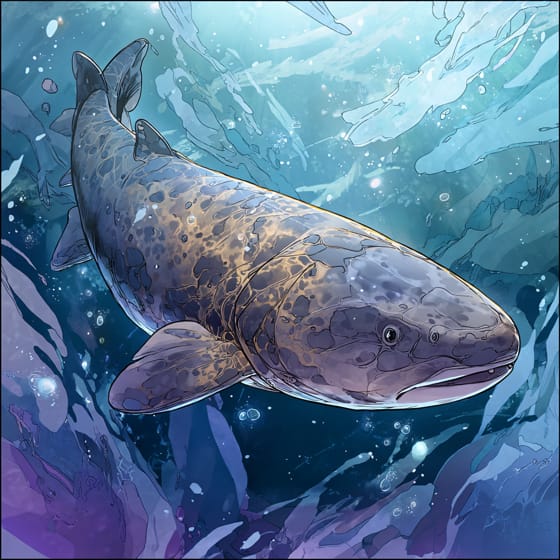
Somniosus microcephalus
Opportunistically preys on isopods in its deep-sea hunting.
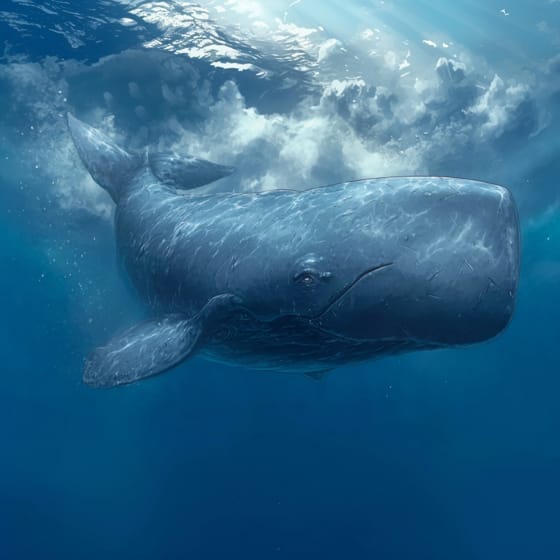
Physeter macrocephalus
Feeds on fallen carcasses, contributing to ocean floor recycling.
Macrourus berglax
Scavenges on its decaying remains, cleaning the deep-sea floor.
Solitary animals live alone for most of their lives, only interacting with others for mating or parental care.
Scavengers consume dead organic matter, helping to decompose carcasses and other waste in the ecosystem.
This trait signifies organisms belonging to a very old evolutionary group with ancestors dating back millions of years.
Deep sea habitats are characterized by extreme pressure, darkness, and cold temperatures, supporting unique life forms below the sunlit zone.

This trait characterizes organisms with an exceptionally long lifespan compared to others of their kind.

Armored describes animals protected by a hard, external covering or shell for defense.
Regenerative organisms possess the ability to regrow lost or damaged body parts, tissues, or organs.

Giant describes organisms or objects of significantly larger size than average for their species or type.

Nocturnal animals are primarily active during the nighttime hours, typically resting or sleeping during the day.
Danger
1/5 · Very low
Remember, Giant Isopods live in the deep sea, far away from where we swim. They are not dangerous to us.
190-500 mm
3650-18250 days
These deep-sea scavengers mostly eat dead whales, fish, and other decaying matter that falls from above.
Deep Sea
Scavenging
14
Zoom in to split clusters and explore where this object has been snapped.
Recent snaps will appear here as new observations are added.