




Boar
Sus scrofa
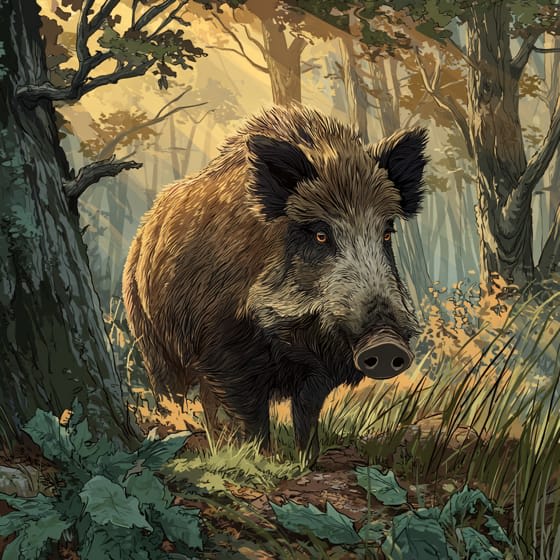
Boars are wild pigs with strong bodies and tusks. They like to root around in the ground for food and live in forests and grasslands.
Habitat: Forests, Grasslands
The Boar has a robust body covered in coarse, bristly hair, typically dark brown, grey, or black. It features a prominent snout for rooting and short, sturdy legs. Unlike its domesticated relatives, the wild boar possesses visible tusks and a more muscular, powerful build.
Category
MammalsRarity
Common
Danger
3/5 · Moderate
Snaps
Be the first to snap!
A group of boars is called a "sounder," and they often live together in family groups.
Their thick, bristly coat helps them stay warm in winter and protects them from thorny plants.
Wild boars are excellent swimmers and can cross wide rivers or small sea channels!
Wild boars build cozy 'nests' from branches and leaves for resting!
Boars can find food buried deep underground because of their powerful sense of smell and strong snouts.
Boars have sharp tusks that help them dig for roots and defend themselves from predators like wolves.
Boars can root up tough soil and plants because of their strong neck muscles and sturdy snout.
Boars love to roll in mud, which helps them cool down and get rid of pesky parasites.
Wild boars are super adaptable eaters, munching on almost anything from plants to small critters!
Canis lupus
Wolves hunt boars, especially young or weak individuals.
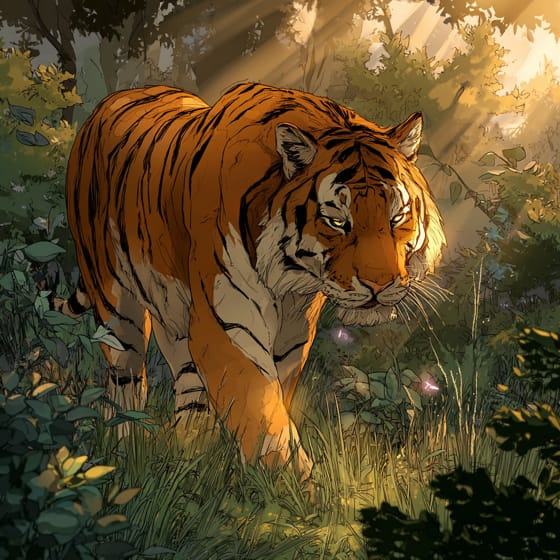
Panthera tigris
Tigers are major predators of wild boars in Asian forests.
Quercus robur
Boars feast on the nutritious acorns produced by oak trees.
Agaricus bisporus
Boars root around to find and eat many kinds of fungi.
Social animals live in organized groups, cooperating for survival benefits such as foraging, defense, and raising offspring.
This trait identifies organisms whose diet includes both plant and animal matter.
Camouflaged describes organisms that possess coloring or patterns that allow them to blend into their environment.
Grassland habitats are terrestrial biomes dominated by grasses and herbaceous plants, supporting a variety of grazing animals.

This trait describes organisms that manipulate external objects to achieve a specific goal.

Characterized by having long, pointed, projecting teeth, usually in pairs.

Forest habitats are terrestrial environments dominated by dense tree cover, supporting a high diversity of plant and animal life.

Nocturnal animals are primarily active during the nighttime hours, typically resting or sleeping during the day.
No aliases listed yet.
Danger
3/5 · Moderate
Boars can be dangerous if they feel threatened. Always stay at a safe distance and never approach them.
90-200 cm
50-190 kg
5-10 years
40 km/h
Wild boars are super adaptable eaters, munching on almost anything from plants to small critters!
Forests, Grasslands
Foraging
4-12
Zoom in to split clusters and explore where this object has been snapped.
Recent snaps will appear here as new observations are added.