Lavenders
Lavandula
Lavenders are beautiful purple flowers that smell wonderful! They grow in sunny places and attract bees and butterflies, making gardens colorful and lively.
Habitat: Sunny gardens
The Lavenders has slender, often woody stems with narrow, silvery-green leaves. Its most striking feature is the dense spikes of tiny, fragrant flowers, typically in shades of vibrant purple or violet, but sometimes pink or white.
Category
PlantsRarity
Common
Danger
1/5 · Very low
Snaps
Be the first to snap!
Ancient Egyptians used lavender for mummification and perfumes over 2,500 years ago.
Lavender's soothing scent can instantly remind people of peaceful, happy memories!
Some lavender flowers are actually white or pink, not just purple!
The name 'lavender' comes from a Latin word meaning 'to wash'!
Lavenders has aromatic oils that deter many plant-eating insects, helping it stay healthy and safe from harm.
Lavenders can survive long, hot, dry periods because its leaves and roots are adapted to conserve water.
Lavenders has brightly colored flowers and sweet nectar, attracting bees and butterflies to help them reproduce.
Apis mellifera
Gathers nectar to make honey.
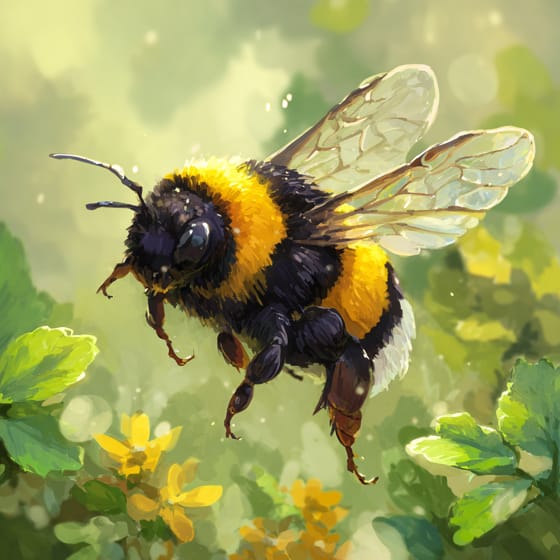
Bombus terrestris
Visits flowers for nectar and pollen.
Macrosiphum euphorbiae
Feeds on sap, weakening the plant.
Aromatic plants produce and emit fragrant volatile organic compounds, often for defense or to attract pollinators.
Flowering plants are any plants that produce flowers as part of their reproductive cycle.
A shrub is a woody plant smaller than a tree, typically with multiple stems branching from or near the ground.
Summer blooming plants produce their flowers during the summer season, often providing vibrant color when many other plants have finished.

Fragrant flowers emit a pleasant aroma, often to attract pollinators or for defense.

Medicinal plants possess chemical compounds that can be used for therapeutic purposes to treat illnesses or maintain health.

Drought-tolerant plants can survive and flourish in conditions with limited water availability.

Colorful describes organisms or objects displaying a wide range of bright and distinct colors.

Describes plants that are particularly attractive and beneficial to a wide range of pollinating organisms.

This habitat trait indicates species that can coexist with humans in urban and suburban environments, utilizing man-made structures and green spaces.
Danger
1/5 · Very low
Always ask an adult before picking flowers, and be gentle with plants.
30-90 cm
30-90 cm
0.5-1 cm
Late spring to late summer
Yes
None
Perennial
Insect
Zoom in to split clusters and explore where this object has been snapped.
Recent snaps will appear here as new observations are added.