European Hare
Lepus (Eulagos) europaeus
The European Hare is a lively animal that loves to hop around in fields and meadows. With long ears and powerful legs, it can run fast to escape from danger.
The European Hare is a large hare, recognized by its long, black-tipped ears and powerful hind legs. Its coat is typically golden-brown to grey-brown, with a paler belly. Unlike rabbits, it has longer limbs and a more slender, athletic build.
Category
MammalsRarity
Common
Danger
1/5 · Very low
Snaps
Be the first to snap!
Baby hares are called "leverets" and are born with fur and open eyes!
Hares can "box" with their front paws during mating season to show dominance!
Hares have a secret superpower: they can run almost as fast as a cheetah!
Hares never live in burrows; they rest in shallow depressions called "forms"!
European Hare has long, rotatable ears that help them detect faint sounds of predators from far away.
European Hare can run in unpredictable zig-zag patterns that help them confuse and escape from chasing predators.
Hares munch on a variety of plants, from grasses to crops, to get the energy they need!
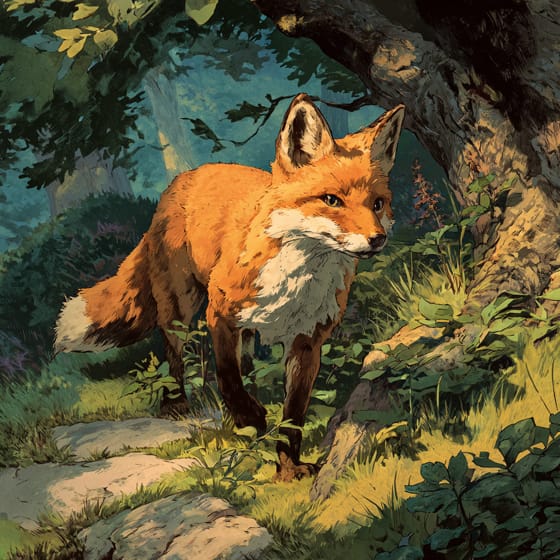
Vulpes vulpes
A primary predator, especially targeting young hares.

Aquila chrysaetos
Large raptor that hunts hares from the skies.
Lolium perenne
A common grass that forms a significant part of its diet.
Wildlife encompasses all undomesticated animal and plant life existing in their natural habitats.
Furry describes animals possessing a dense covering of soft hair or fur.
Grassland habitats are terrestrial biomes dominated by grasses and herbaceous plants, supporting a variety of grazing animals.
This trait characterizes organisms whose diet consists entirely or primarily of plant material.

This trait characterizes organisms with an exceptionally long lifespan compared to others of their kind.

This trait identifies organisms that exhibit exceptional swiftness in movement for hunting, escape, or travel.

Migratory animals undertake seasonal movements from one region to another, typically in response to changes in climate or food availability.

Nocturnal animals are primarily active during the nighttime hours, typically resting or sleeping during the day.
Danger
1/5 · Very low
European Hares are wild animals. It's best to watch them from a distance and not try to touch or chase them.
48-75 cm
2.5-6.5 kg
4-7 years
72 km/h
Hares munch on a variety of plants, from grasses to crops, to get the energy they need!
Foraging
1-5
41-42 days
Zoom in to split clusters and explore where this object has been snapped.
Recent snaps will appear here as new observations are added.