




Common Evening Brown
Lethe isobeon
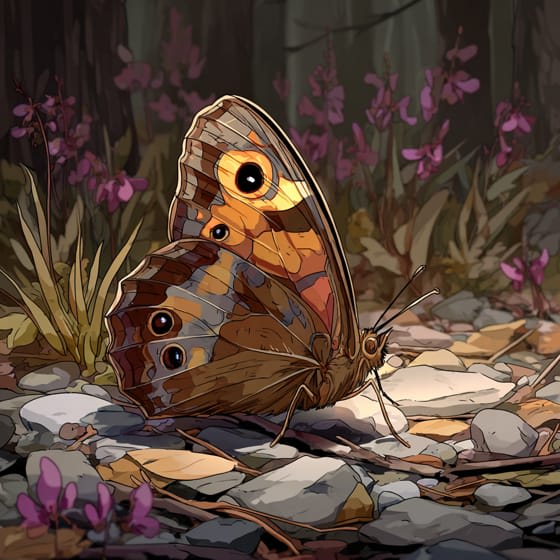
The Common Evening Brown butterfly is a brown butterfly that likes to rest on the ground during the day. It comes out in the evening to fly!
Habitat: Grasslands and open areas
The Common Evening Brown is a medium-sized butterfly with soft brown wings, often showing a slightly darker margin. Its underside is a mottled light brown with delicate wavy lines and several small, dark eyespots, particularly prominent on the hindwings, which can vary in visibility.
Category
InsectsRarity
Common
Danger
2/5 · Low
Snaps
Be the first to snap!
Its caterpillars have two tiny 'horns' on their heads and a forked tail.
Their wings sometimes have a beautiful, subtle sheen that shimmers in the right light.
They help pollinate flowers even when the sun isn't shining brightly!
Unlike many butterflies, this one prefers to fly during cool, dim dawn or dusk!
Common Evening Brown has small eyespots on its wings that helps them trick predators into attacking their wings instead of their body.
Common Evening Brown can blend into shadows because its muted brown colors help them hide from hungry predators.
Common Evening Brown can fly in dim light because its specialized vision helps them find nectar when other butterflies are resting.
Caterpillars munch on leaves, while adult butterflies sip sweet flower nectar.
Age differences: Larvae feed exclusively on grass leaves, but adults drink nectar from various flowers and occasionally rotting fruit.
Eleusine indica
Its caterpillars munch on its leaves to grow big and strong.
Motacilla alba
Small birds, especially wagtails, love to snack on adult butterflies.
Argiope anasuja
Spiders often catch unwary butterflies in their sticky webs.
Lantana camara
Adults visit its flowers for sweet nectar, helping the plant reproduce.
Wildlife encompasses all undomesticated animal and plant life existing in their natural habitats.
Camouflaged describes organisms that possess coloring or patterns that allow them to blend into their environment.
Grassland habitats are terrestrial biomes dominated by grasses and herbaceous plants, supporting a variety of grazing animals.
This trait characterizes organisms whose diet consists entirely or primarily of plant material.

Diurnal animals are primarily active during daylight hours, typically resting or sleeping at night.
No aliases listed yet.
Danger
2/5 · Low
Do not touch or pick up. Some insects sting or bite. Ask an adult for help.
40-60 mm
15-20 mm
30-60 days
15 km/h
Caterpillars munch on leaves, while adult butterflies sip sweet flower nectar.
Grasslands and open areas
Foraging
6
Zoom in to split clusters and explore where this object has been snapped.
Recent snaps will appear here as new observations are added.