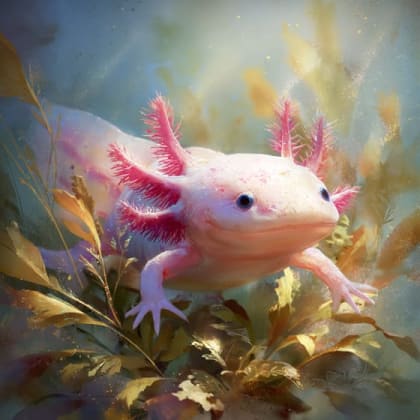




Japanese Giant Salamander
Andrias japonicus
The Japanese Giant Salamander is a big and friendly-looking creature. It can live for a very long time, sometimes over 100 years!
Habitat: Freshwater rivers and streams
The Japanese Giant Salamander has mottled brown and black skin, offering excellent camouflage in rocky riverbeds. It features a broad, flattened head with tiny eyes and a wide mouth, and its body is covered in distinctive, loose wrinkles.
Category
AmphibiansRarity
Rare
Danger
2/5 · Low
Snaps
Be the first to snap!
Despite their massive size, they spend almost their entire lives hidden under rocks in rivers.
These salamanders can make a barking sound, similar to a dog's bark!
They are 'living fossils,' having changed very little for millions of years!
They can live for over 50 years, making them one of the longest-living amphibians!
Japanese Giant Salamander can breathe through its skin because its large surface area and thin skin absorb oxygen directly from the cool, flowing water.
Japanese Giant Salamander can patiently wait for prey because its camouflage and low metabolism allow it to stay motionless for long periods before striking.
Japanese Giant Salamander has poor eyesight but highly sensitive senses of touch and smell that help them detect prey in murky, dark river waters.
They are top predators, eating fish, frogs, and insects they ambush in their freshwater homes.
Age differences: Young salamanders eat smaller insects and crustaceans, while adults hunt larger fish and crabs.
Oncorhynchus masou
A primary prey fish in its river habitat.
Rana ornativentris
Adults and tadpoles are caught in the water.
Procambarus clarkii
An invasive species, often consumed.
Characterized by having toes connected by a membrane, typically aiding in swimming.
This trait characterizes organisms with an exceptionally long lifespan compared to others of their kind.
This trait identifies organisms whose diet consists entirely or primarily of animal tissue.
Freshwater habitats include non-saline aquatic environments such as rivers, lakes, ponds, and wetlands, vital for numerous species.

Regenerative organisms possess the ability to regrow lost or damaged body parts, tissues, or organs.

Aquatic habitats encompass environments where organisms live predominantly in water, including oceans, rivers, lakes, and wetlands.

Giant describes organisms or objects of significantly larger size than average for their species or type.

Nocturnal animals are primarily active during the nighttime hours, typically resting or sleeping during the day.
Danger
2/5 · Low
Look but don’t touch. Keep a safe distance and wash hands after exploring.
60-150 cm
5-25 kg
50-80 years
2 km/h
They are top predators, eating fish, frogs, and insects they ambush in their freshwater homes.
Freshwater rivers and streams
Ambush
400-600
Zoom in to split clusters and explore where this object has been snapped.
Recent snaps will appear here as new observations are added.