


Loggerhead Sea Turtle
Caretta caretta
The Loggerhead Sea Turtle is a big turtle with a strong jaw. They love to swim in the ocean and can dive deep to find food!
Habitat: Oceans and coastal areas
The Loggerhead Sea Turtle has a large, reddish-brown, heart-shaped shell and a distinctive oversized head with powerful jaws. Its plastron is typically yellowish, and it uses four strong flippers for swimming. This makes it visually different from other sea turtles by its head size and shell color.
Category
ReptilesRarity
Common
Danger
2/5 · Low
Snaps
Be the first to snap!
Baby Loggerheads' gender is decided by the temperature of the sand in their nest!
Many female Loggerheads return to the exact beach where they were born to lay their own eggs.
Some Loggerheads travel thousands of miles across oceans to find food or mates!
They can drink saltwater because special glands remove extra salt from their bodies.
Loggerhead Sea Turtle has incredibly strong jaws that help them crush the hard shells of crabs and clams.
Loggerhead Sea Turtle can sense Earth's magnetic field, helping them navigate vast ocean distances to nesting sites.
Loggerhead Sea Turtle can hold its breath and dive hundreds of meters deep to find food on the ocean floor.
Loggerhead Sea Turtles mainly eat crunchy ocean creatures like crabs, clams, and sea urchins.
Age differences: Juveniles eat more floating plankton and pelagic invertebrates, while adults focus on benthic, hard-shelled prey.
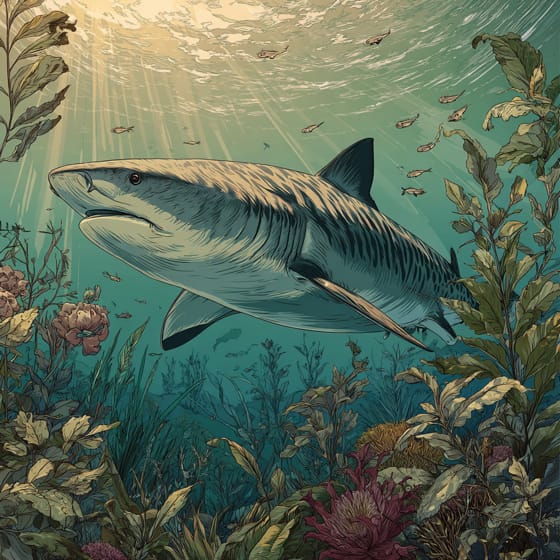
Galeocerdo cuvier
Large adults are sometimes preyed upon by Tiger Sharks.

Carcharhinus leucas
Known to prey on juvenile Loggerhead Sea Turtles.
Pagurus pollicaris
A common part of the Loggerhead's diet of hard-shelled invertebrates.
Chelonibia testudinaria
Attaches to the turtle's shell, hitching a ride through the ocean.
This trait identifies organisms whose diet includes both plant and animal matter.
Piscivorous organisms are animals that primarily subsist on a diet of fish.
Thermoregulating organisms maintain a stable internal body temperature despite fluctuations in the external environment.
This trait signifies organisms belonging to a very old evolutionary group with ancestors dating back millions of years.

This trait characterizes organisms with an exceptionally long lifespan compared to others of their kind.

Coastal habitats are dynamic environments located along the interface between land and sea, influenced by tides, waves, and saltwater.

Armored describes animals protected by a hard, external covering or shell for defense.

Describes a species whose presence and role have a disproportionately large effect on its environment.

Aquatic habitats encompass environments where organisms live predominantly in water, including oceans, rivers, lakes, and wetlands.

Marine habitats encompass all saltwater environments of the Earth's oceans, supporting an immense diversity of aquatic life.

Migratory animals undertake seasonal movements from one region to another, typically in response to changes in climate or food availability.
Danger
2/5 · Low
Look but don’t touch. Keep a safe distance and wash hands after exploring.
70-110 cm
80-200 kg
50-70 years
24 km/h
Loggerhead Sea Turtles mainly eat crunchy ocean creatures like crabs, clams, and sea urchins.
2.5 km/h
Oceans and coastal areas
Foraging
Zoom in to split clusters and explore where this object has been snapped.
Recent snaps will appear here as new observations are added.