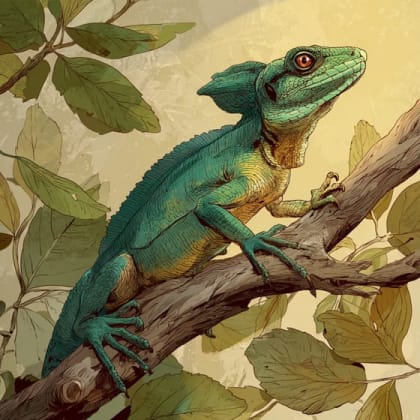
Blue Iguana
Cyclura lewisi
The Blue Iguana is a large, beautiful lizard with bright blue skin! It loves to bask in the sun on rocky shores.
Habitat: Islands and coastal areas
The Blue Iguana has a stout body with a distinctive spiny crest running down its back. Males display brilliant turquoise-blue skin, especially during breeding season, while females are typically duller grey-blue. They possess powerful limbs and large, bright eyes, making them visually striking.
Category
ReptilesRarity
Rare
Danger
2/5 · Low
Snaps
Be the first to snap!
Baby blue iguanas are actually brown, not blue!
Blue iguanas can live longer than most cats and dogs.
They are only found wild on the island of Grand Cayman!
They communicate with each other by head-bobbing messages.
Blue Iguana can dig extensive underground tunnels that help them escape predators and find shelter from extreme weather.
Blue Iguana has dark skin pigmentation that helps them absorb heat quickly from the sun and warm up their cold-blooded bodies.
Blue Iguana can use its long, muscular tail as a powerful whip to defend itself against potential threats.
Blue Iguana has excellent eyesight that helps them spot delicious plants and potential dangers from a distance.
This plant-eating lizard munches on a variety of leaves, fruits, and flowers from the Cayman Islands.
Age differences: Juveniles may opportunistically eat insects and larvae for extra protein.
Felis catus
Hunts young iguanas and eggs
Rattus rattus
Preys on eggs and hatchlings
Thrinax radiata
An important food source
Ficus aurea
Consumes its leaves and fruits
Chamaesyce canescens
Eats its leaves
Wildlife encompasses all undomesticated animal and plant life existing in their natural habitats.
Social animals live in organized groups, cooperating for survival benefits such as foraging, defense, and raising offspring.
Colorful describes organisms or objects displaying a wide range of bright and distinct colors.
This trait characterizes organisms whose diet consists entirely or primarily of plant material.

This trait characterizes organisms with an exceptionally long lifespan compared to others of their kind.

Coastal habitats are dynamic environments located along the interface between land and sea, influenced by tides, waves, and saltwater.
Danger
2/5 · Low
Look but don’t touch. Keep a safe distance and wash hands after exploring.
100-150 cm
4-14 kg
25-35 years
20 km/h
This plant-eating lizard munches on a variety of leaves, fruits, and flowers from the Cayman Islands.
Islands and coastal areas
Foraging
1-21
Zoom in to split clusters and explore where this object has been snapped.
Recent snaps will appear here as new observations are added.