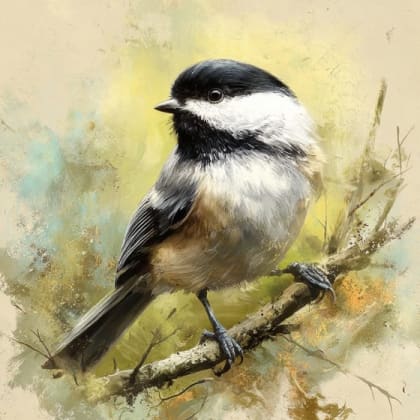
Chiffchaff
Phylloscopus ibericus
The chiffchaff is a small, cheerful bird with a lovely song. You can often hear it singing in the trees during spring and summer!
The Iberian Chiffchaff is a small, slender warbler with olive-green upperparts and bright yellowish underparts. It has a distinct yellowish supercilium, dark eye-stripe, and pale legs, making it brighter and more colourful than the common chiffchaff.
Category
BirdsRarity
Common
Danger
1/5 · Very low
Snaps
Be the first to snap!
Iberian Chiffchaffs prefer higher altitudes for breeding than their relatives.
It was only recognized as a separate species from the Common Chiffchaff in 1997!
Its beautiful song, a descending trill, is quite different from other chiffchaffs.
They often build their nests very low to the ground, almost hidden in dense shrubs.
Iberian Chiffchaff can sing complex, melodic trills because its unique song helps attract mates and defend its breeding territory.
Iberian Chiffchaff has excellent navigational skills that help it migrate across the Strait of Gibraltar to North Africa each year.
Iberian Chiffchaff can skillfully pluck insects from leaves and air because its agile flight allows precise aerial foraging.
These tiny birds primarily eat small insects and spiders they find on leaves and in the air.
Accipiter nisus
A common predator of small birds in its Iberian breeding grounds.
Genetta genetta
Predates small birds and their nests in the Iberian Peninsula.
Quercus ilex
Provides essential nesting sites and abundant insect food in Mediterranean woodlands.
Coccinella septempunctata
Iberian Chiffchaffs forage for small beetles, including ladybirds, on foliage.
Wildlife encompasses all undomesticated animal and plant life existing in their natural habitats.
Feathered describes animals, primarily birds, possessing a covering of feathers.
Singing animals produce complex vocalizations, often for purposes of attracting mates, defending territory, or communicating within their species.
Camouflaged describes organisms that possess coloring or patterns that allow them to blend into their environment.

This trait identifies organisms whose diet primarily consists of insects and other small invertebrates.

Forest habitats are terrestrial environments dominated by dense tree cover, supporting a high diversity of plant and animal life.

Diurnal animals are primarily active during daylight hours, typically resting or sleeping at night.

Migratory animals undertake seasonal movements from one region to another, typically in response to changes in climate or food availability.
No aliases listed yet.
Danger
1/5 · Very low
Chiffchaffs are friendly little birds that are safe to watch from a distance. Enjoy their songs without bothering them!
10-12 cm
15-21 cm
0.006-0.01 kg
2-7 years
35 km/h
These tiny birds primarily eat small insects and spiders they find on leaves and in the air.
Foraging
4-6
Zoom in to split clusters and explore where this object has been snapped.
Recent snaps will appear here as new observations are added.