




Citrine
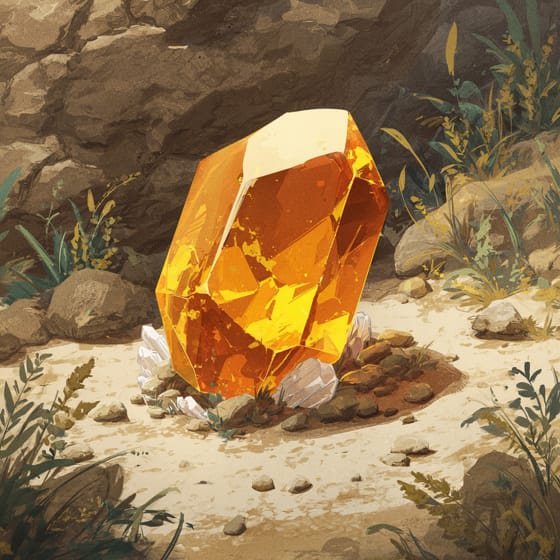
Citrine is a bright yellow crystal that looks like sunshine! It brings happiness and warmth wherever it is found.
The Citrine is a shimmering yellow to golden-orange mineral, often transparent and bright. Its sunny hues, ranging from pale lemon to deep amber, make it distinct from common clear quartz, resembling solidified sunlight.
Category
MineralRarity
Common
Danger
1/5 · Very low
Snaps
Be the first to snap!
Ancient Romans treasured citrine, carving it into beautiful intaglio rings.
It's named after the French word 'citron' because of its bright lemon-like color.
Most natural citrine is actually heat-treated amethyst or smoky quartz!
Some enormous citrine geodes have been discovered, weighing hundreds of pounds!
Citrine has the ability to change color when heated, often transforming from purple amethyst into its golden hue.
Citrine has a high Mohs hardness of 7, making it durable and resistant to scratches from many other materials.
Citrine is transparent, allowing light to pass through and refract, giving it a brilliant, sparkling appearance.
Vitreous luster describes a mineral's appearance when reflecting light, resembling glass, often translucent or transparent.
Colorful describes organisms or objects displaying a wide range of bright and distinct colors.
A geode is a hollow, spherical rock formation lined with inward-growing crystals or concentric banding, often found in volcanic or sedimentary rocks.
A gemstone is a piece of mineral crystal which, when cut and polished, is used to make jewelry or other adornments.

Crystalline describes a mineral or rock composed of crystals, often exhibiting a regular atomic structure and geometric external form.

Natural refers to organisms, materials, or phenomena existing or produced by nature, not artificially created.
Danger
1/5 · Very low
Handle gently and avoid sharp edges. Ask an adult before picking anything up.
yellow, golden-orange, brownish-red
7
vitreous
2.65
trigonal
Zoom in to split clusters and explore where this object has been snapped.
Recent snaps will appear here as new observations are added.