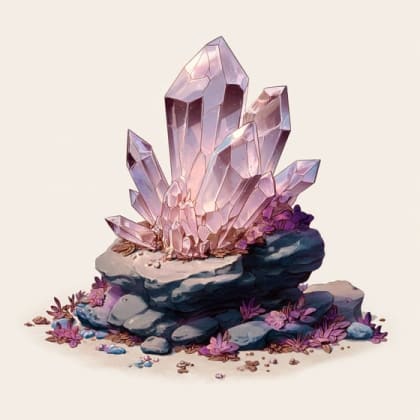



Peridot
Peridot is a bright green gemstone that is often used in jewelry. It looks like a little piece of sunshine!
The Peridot is famous for its vibrant olive-green or yellowish-green color. Its lively green, often with a subtle golden glint, makes it distinctly different from darker emeralds or lighter green beryl.
Category
MineralRarity
Common
Danger
1/5 · Very low
Snaps
Be the first to snap!
Ancient Egyptians called peridot the 'gem of the sun' and cherished it.
It's one of only two gemstones that form deep within Earth's hot mantle!
Its vibrant green color comes from tiny iron atoms trapped within its crystals.
Peridot crystals have even been discovered in samples of moon rock!
Peridot is one of the rare gems found inside meteorites, meaning it has literally traveled through space!
Peridot's double refraction can make facets appear doubled or fuzzy, a unique optical illusion!
Peridot forms deep in Earth's mantle, not the crust, showing incredible resistance to extreme heat.
Colorful describes organisms or objects displaying a wide range of bright and distinct colors.
Fluorescent minerals emit visible light when exposed to ultraviolet light or other non-visible radiation, a phenomenon called fluorescence.
A gemstone is a piece of mineral crystal which, when cut and polished, is used to make jewelry or other adornments.
Crystalline describes a mineral or rock composed of crystals, often exhibiting a regular atomic structure and geometric external form.
Danger
1/5 · Very low
Handle gently and avoid sharp edges. Ask an adult before picking anything up.
The easiest way to identify Peridot is to use the Snappit nature identifier app.
yellowish-green, olive-green, lime-green, brownish-green
6.75
vitreous
3.34
orthorhombic
Zoom in to split clusters and explore where this object has been snapped.
Recent snaps will appear here as new observations are added.
Take the discovery with you
Snap it with Snappit to identify it, learn what makes it special, and add the discovery to your collection.