Sailfin Tang
Zebrasoma desjardini
The Sailfin Tang has a beautiful sail-like fin that it can raise and lower. It loves to swim in the warm waters of the ocean.
Habitat: Coral reefs
The Sailfin Tang has a tall, disk-like body with magnificent sail-like dorsal and anal fins. Its body is adorned with alternating light and dark vertical stripes, often brownish, with yellow spots near its head and blue lines on its fins.
Category
FishRarity
Common
Danger
2/5 · Low
Snaps
Be the first to snap!
Baby Sailfin Tangs are tiny and see-through, hiding until they grow larger.
Their huge fins make them look much bigger to scare away other fish!
These fish can sometimes rub against sharks, cleaning off parasites!
They use their strong fins to dart in and out of tight coral spaces.
Sailfin Tangs can munch on algae because they have a special mouth that helps them keep coral reefs sparkling clean.
Sailfin Tangs have a super sharp spine near their tail that helps them defend against predators.
Sailfin Tangs can change their stripe patterns because this helps them communicate or hide from danger.
A super grazer, this fish helps keep coral reefs healthy by eating lots of tiny algae.
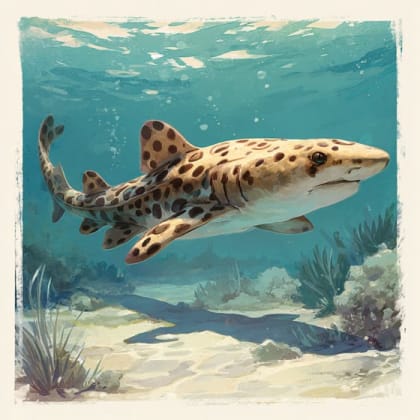
Carcharhinus amblyrhynchos
A large reef predator that hunts many reef fish.
Plectropomus leopardus
A common reef fish predator.
Lysmata amboinensis
These shrimp remove parasites from the fish's body.
Acropora digitifera
Hides among branches of this common reef coral.
Social animals live in organized groups, cooperating for survival benefits such as foraging, defense, and raising offspring.
Colorful describes organisms or objects displaying a wide range of bright and distinct colors.
Filter feeders obtain nutrients by straining suspended food particles and small organisms from water.
This trait characterizes organisms whose diet consists entirely or primarily of plant material.

This trait signifies organisms belonging to a very old evolutionary group with ancestors dating back millions of years.

This trait characterizes organisms with an exceptionally long lifespan compared to others of their kind.

Diurnal animals are primarily active during daylight hours, typically resting or sleeping at night.

Aquatic habitats encompass environments where organisms live predominantly in water, including oceans, rivers, lakes, and wetlands.

Marine habitats encompass all saltwater environments of the Earth's oceans, supporting an immense diversity of aquatic life.
Danger
2/5 · Low
Watch quietly from a distance and never try to feed or chase wild animals.
10-40 cm
0.1-0.8 kg
5-12 years
A super grazer, this fish helps keep coral reefs healthy by eating lots of tiny algae.
5 km/h
Coral reefs
Grazing
60 m
Zoom in to split clusters and explore where this object has been snapped.
Recent snaps will appear here as new observations are added.