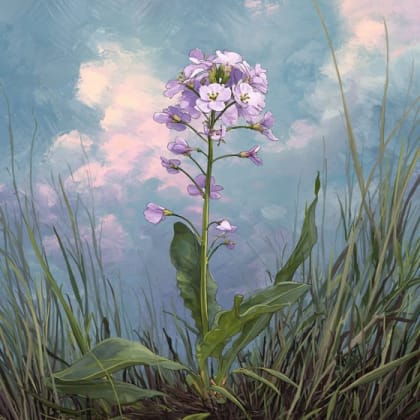




Begonia
Begonia
Begonias are lovely flowers that can brighten up any space! They come in many colors and are often grown indoors.
Habitat: Gardens and indoor spaces
The Begonia has vibrant, often asymmetrical leaves with striking patterns and colours, ranging from green to deep red. Its delicate flowers, in shades of red, pink, orange, yellow, or white, can be single or double-petaled, adding a splash of intense colour.
Category
PlantsRarity
Common
Danger
1/5 · Very low
Snaps
Be the first to snap!
A Begonia flower can look like a tiny rose or a ruffled carnation!
Begonias were first discovered way back in the 1600s!
Some Begonias have leaves that are bigger than your hand!
They grow wild in steamy rainforests all over the world.
Begonia can have thick, tuberous roots that store water and nutrients, helping it survive short dry periods.
Begonia plants produce separate male and female flowers on the same plant, ensuring successful seed production.
Many Begonias have colourful, patterned leaves that can help deter herbivores or attract pollinators from afar.
Apis mellifera
Helps carry pollen between male and female flowers.
Bombus terrestris
Visits Begonia blooms, aiding in plant reproduction.
Deroceras reticulatum
Feeds on Begonia leaves and tender stems in gardens.
Annual plants complete their entire life cycle, from germination to seed production, within a single growing season.
Cluster flowers are inflorescences where individual flowers are arranged closely together on a common stem.
Shade tolerant plants are adapted to grow and thrive in areas with low light levels, requiring less direct sunlight.
Everblooming plants produce flowers continuously or in repeated flushes over a long period.

Fragrant flowers emit a pleasant aroma, often to attract pollinators or for defense.

This habitat trait indicates species that can coexist with humans in urban and suburban environments, utilizing man-made structures and green spaces.
Danger
1/5 · Very low
Explore with care and ask an adult if you’re unsure what to do.
15-90 cm
15-90 cm
2-15 cm
Late spring to fall
No
Mild
Perennial
Insect
Zoom in to split clusters and explore where this object has been snapped.
Recent snaps will appear here as new observations are added.