




Peach Tree
Prunus persica
Peach Trees are known for their sweet, fuzzy fruit! They have beautiful pink flowers in the spring.
Habitat: Gardens and orchards
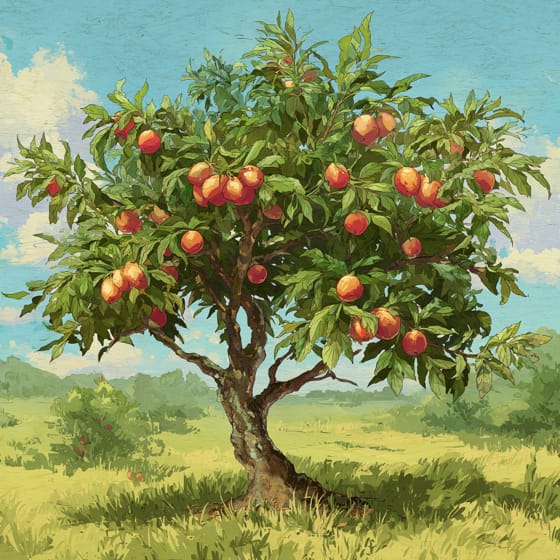
The Peach Tree has beautiful pink to reddish-purple blossoms in spring before its bright green, lance-shaped leaves fully emerge. Its fuzzy, round fruits ripen to vibrant yellow, orange, and red hues in summer, hanging from light brown branches.
Category
TreesRarity
Common
Danger
1/5 · Very low
Snaps
1
A single peach tree can produce hundreds of fruits in just one harvest season!
Peaches are related to almonds, both being 'stone fruits' with hard inner shells!
Some peach trees have 'nectarine' branches, which grow fruit without the fuzzy skin!
The first peaches were grown in China over 8,000 years ago, making them ancient!
Peach Tree has a unique chilling requirement, needing cold winter temperatures to produce its delicious fruit in spring.
Peach Tree fruit has a fuzzy skin that helps protect it from insects and sometimes even direct sunlight.
Peach Tree flowers produce a sweet scent to attract bees and other insects for important pollination.
Peach Tree can produce fruit very quickly, often within 2-4 years of being planted, helping it reproduce fast.
Apis mellifera
Vital for carrying pollen between flowers.
Cydia molesta
Its larvae burrow into the fruit, causing damage.
Homo sapiens
People cultivate and harvest peaches for food.
Monilinia fructicola
Causes fruit to rot and can damage blossoms.
Deciduous plants periodically shed all their leaves, typically during autumn or dry seasons.
Spring blooming plants produce their flowers during the spring season, often signifying the end of winter and the start of new growth.
Fragrant flowers emit a pleasant aroma, often to attract pollinators or for defense.
Fruit-bearing plants produce fruits, which are the mature ovaries of flowering plants containing seeds.

A fruit tree is a perennial tree that produces fruit, which is edible to humans or animals.

Edible plants are those parts of a plant that are considered safe for human consumption.

This habitat trait indicates species that can coexist with humans in urban and suburban environments, utilizing man-made structures and green spaces.

Describes organisms that transfer pollen, enabling the fertilization and reproduction of plants.
Danger
1/5 · Very low
Do not pick or eat anything you find. Some plants and mushrooms can be harmful.
3-7 m
3-6 m
Yes
15-30 cm
10-25 years
Gardens and orchards
Drupe
Medium
Zoom in to split clusters and explore where this object has been snapped.