




Lilac
Lilac Mill.
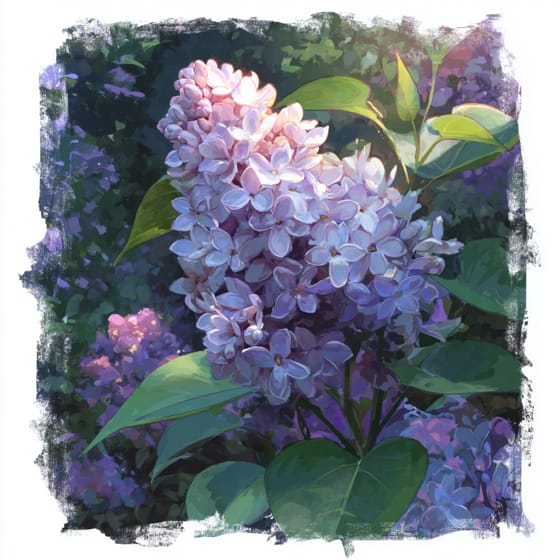
Lilacs are sweet-smelling flowers that bloom in spring. They are often purple and are loved by many for their fragrance!
Habitat: Lilacs enjoy sunny spots and are often seen in backyards and gardens.
The Lilac is a woody shrub or small tree with heart-shaped green leaves. It has large, conical clusters of small, intensely fragrant flowers, often purple, but also found in white, pink, and magenta hues.
Category
PlantsRarity
Common
Danger
1/5 · Very low
Snaps
Be the first to snap!
Different colored lilacs historically symbolize different emotions!
Lilac flowers are edible and can be used to make delicious jelly!
Some lilac bushes can live for over 100 years, growing very tall!
The name 'Lilac' comes from a Persian word meaning 'blue'!
Lilac has a powerful sweet fragrance that helps it attract pollinators like bees and butterflies from a distance.
Lilac has numerous small flowers clustered together, making it easier for pollinators to visit many at once.
Lilac can withstand very cold winters thanks to its woody stems, helping it survive and re-emerge each spring.
Apis mellifera
Visits flowers for nectar and pollen.
Pieris rapae
Feeds on nectar, helping pollination.
Podosesia syringae
Larvae bore into woody stems, causing damage.

Odocoileus virginianus
Deer browse on leaves and young shoots.
Deciduous plants periodically shed all their leaves, typically during autumn or dry seasons.
A shrub is a woody plant smaller than a tree, typically with multiple stems branching from or near the ground.
Spring blooming plants produce their flowers during the spring season, often signifying the end of winter and the start of new growth.
Fragrant flowers emit a pleasant aroma, often to attract pollinators or for defense.

This habitat trait indicates species that can coexist with humans in urban and suburban environments, utilizing man-made structures and green spaces.

Describes organisms that transfer pollen, enabling the fertilization and reproduction of plants.
Danger
1/5 · Very low
Explore with care and ask an adult if you’re unsure what to do.
200-700 cm
150-500 cm
0.5-1.5 cm
Spring to early summer
Yes
None
Perennial
Insect
Zoom in to split clusters and explore where this object has been snapped.
Recent snaps will appear here as new observations are added.