





White-tailed Deer
Odocoileus virginianus
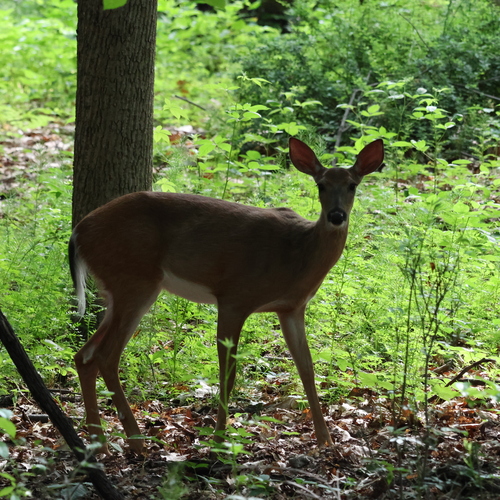
White-tailed deer are graceful animals with reddish-brown fur in summer and grayish fur in winter. They get their name from the white underside of their tail.
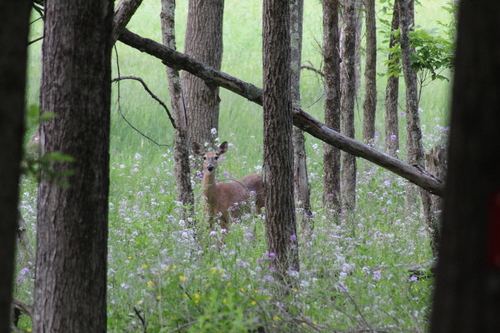
Habitat: Forests, fields, and meadows.
The White-tailed Deer has reddish-brown fur in summer, turning grayish-brown in winter. Its most distinctive feature is the white underside of its tail, which it flags high when startled. They possess large ears and slender legs.
Category
MammalsRarity
Common
Danger
2/5 · Low
Snaps
1,299
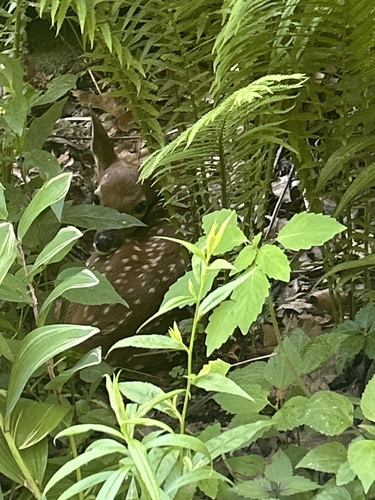
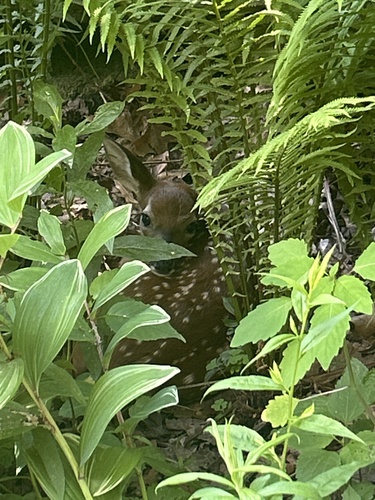
A fawn's spots help it blend perfectly into dappled sunlight.
Deer have four-chambered stomachs to digest tough plant materials.
Newborn fawns can stand and walk within hours of birth!
Their eyes are on the sides of their head for a super-wide view.
White-tailed Deer can flash their bright white tail because it warns other deer of danger, helping them escape predators.
White-tailed Deer has an amazing sense of smell that helps them find hidden food and detect predators from afar.
White-tailed Deer can move almost silently through forests because their hooves are designed for stealthy movement.
They are herbivores that munch on many different plants, from leaves to nuts and berries.
Age differences: Young fawns drink milk, then slowly transition to a plant-based diet like adults.
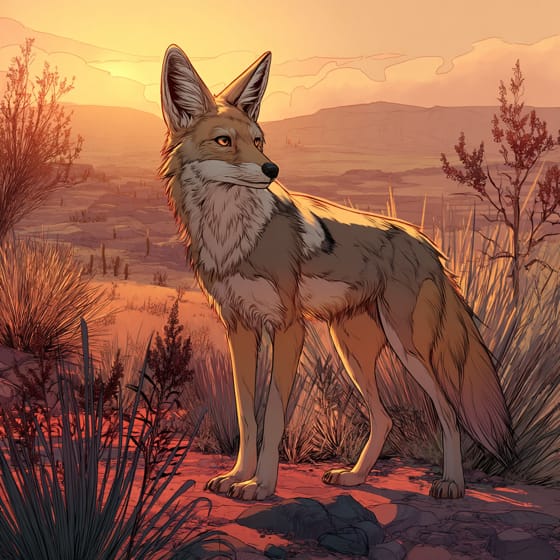
Canis latrans
Coyotes often prey on fawns and sick or weak deer.
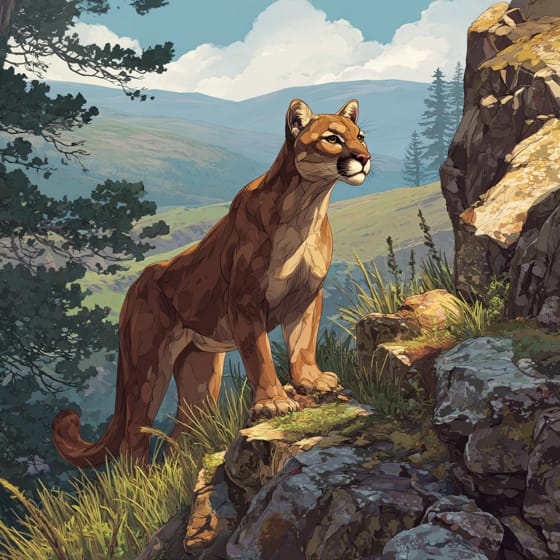
Puma concolor
Cougars are major predators of adult White-tailed Deer.
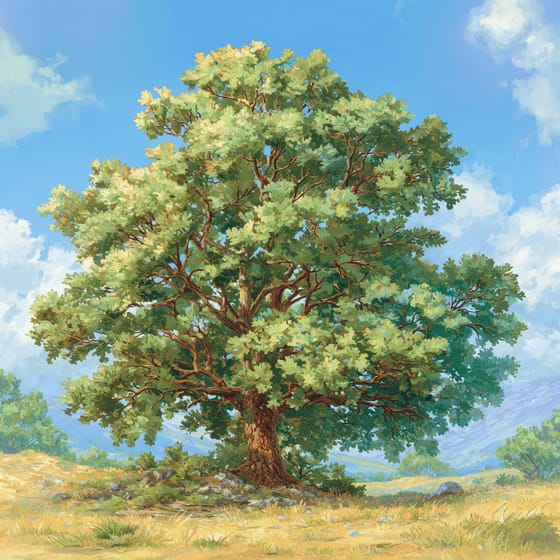
Quercus alba
Deer commonly feed on the acorns and leaves from oak trees.
Ixodes scapularis
Ticks feed on deer blood and can transmit diseases.
Wildlife encompasses all undomesticated animal and plant life existing in their natural habitats.
Furry describes animals possessing a dense covering of soft hair or fur.
Social animals live in organized groups, cooperating for survival benefits such as foraging, defense, and raising offspring.
Antlered describes animals possessing antlers, which are bony, branching growths found predominantly on male deer and related species.

This trait characterizes organisms whose diet consists entirely or primarily of plant material.

Forest habitats are terrestrial environments dominated by dense tree cover, supporting a high diversity of plant and animal life.

Diurnal animals are primarily active during daylight hours, typically resting or sleeping at night.

Nocturnal animals are primarily active during the nighttime hours, typically resting or sleeping during the day.
Danger
2/5 · Low
Keep your distance — deer can kick if startled.
The easiest way to identify White-tailed Deer is to use the Snappit nature identifier app.
150-200 cm
50-130 kg
6-14 years
70 km/h
They are herbivores that munch on many different plants, from leaves to nuts and berries.
Forests, fields, and meadows.
Foraging
Zoom in to split clusters and explore where this object has been snapped.
Jun 15, 2026
Columbia Historic District IPhoto attribution
no rights reserved
License: CC0 1.0 ↗
Image may be shown cropped inside the card frame.
Jun 7, 2026
Wilton Center Historic DistrictPhoto attribution
no rights reserved
License: CC0 1.0 ↗
Image may be shown cropped inside the card frame.
Jun 7, 2026
Wilton Center Historic DistrictPhoto attribution
no rights reserved
License: CC0 1.0 ↗
Image may be shown cropped inside the card frame.
Jun 6, 2026
Reeves-Reed ArboretumPhoto attribution
(c) foxsu, some rights reserved (CC BY)
License: CC BY 4.0 ↗
Image may be shown cropped inside the card frame.
Jun 6, 2026
Harvard Shaker Village Historic DistrictPhoto attribution
(c) Lythronax246, some rights reserved (CC BY)
License: CC BY 4.0 ↗
Image may be shown cropped inside the card frame.

Alabama, US
You might spot Elf Orpine, Canada Goose, and Leatherleaf Mahonia.
View guide →

Georgia, US
You might spot Common Vetch, Tiny Bluet, and Carolina Crane's-Bill.
View guide →

Massachusetts, US
You might spot Eastern White Pine and Common Eastern Bumble Bee.
View guide →

Illinois, US
You might spot Common Eastern Bumble Bee and Brown-Belted Bumble Bee.
View guide →

Michigan, US
You might spot Eastern Gray Squirrel, Tree-Of-Heaven, and House Sparrow.
View guide →

Massachusetts, US
You might spot Eastern Cottontail and American Robin.
View guide →
Take the discovery with you
Snap it with Snappit to identify it, learn what makes it special, and add the discovery to your collection.




.jpg&width=800)

.JPG&width=800)


.jpg&width=800)
