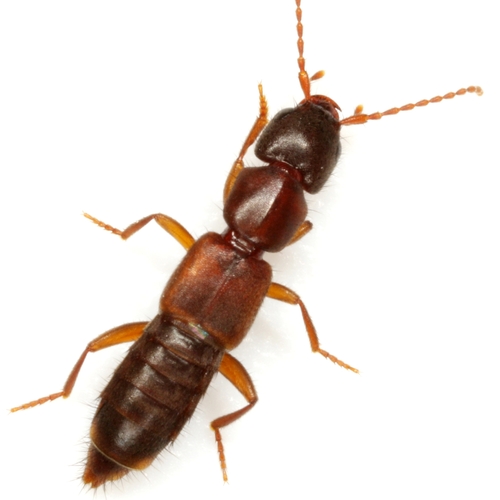


Achenomorphus Corticinus
achenomorphus corticinus
Achenomorphus corticinus ist eine kleine, faszinierende Art von Kurzflügler, die zur Familie der Kurzflügler (Staphylinidae) gehört. Wie die meisten seiner Verwandten besitzt er eine ungewöhnliche, längliche Körperstruktur, die ihn von typisch plumpen Käfern unterscheidet. Er bevorzugt einen kryptischen Lebensstil und verbringt den Großteil seines Lebens versteckt unter der Rinde verrottender Baumstämme und bewegt sich in den engen, komplexen Umgebungen der Waldstreu. Diese versteckte Existenz macht ihn zu einem wichtigen, aber selten beobachteten Beitrag zu gesunden Waldökosystemen. Indem er aktiv kleinere Wirbellose jagt, hilft er, Mikro-Invertebratenpopulationen zu regulieren und unterstützt indirekt den Zersetzungsprozess verrottender organischer Substanz. Seine schlangenartige Anmut und aktive Natur machen ihn zu einem bemerkenswerten Beispiel für mikroräuberische Anpassungen in Waldlebensräumen.
Lebensraum: Typischerweise in feuchten Waldgebieten zu finden, hauptsächlich unter der lockeren Rinde verrottender Bäume oder in reicher, feuchter Waldstreu lebend.
Dieses schlanke Insekt ist typischerweise etwa einen Zentimeter lang und weist einen länglichen, sehr flexiblen Körper auf. Sein auffälligstes Merkmal sind seine stark verkürzten Flügeldecken (Elytren), die mehr als die Hälfte seiner segmentierten Hinterleibssegmente vollständig freilassen. Das Exoskelett weist normalerweise eine glänzende dunkelbraune, rotbraune oder fast schwarze Färbung mit einer fein texturierten Oberfläche auf. Es ist mit mäßig langen, perlenartigen Antennen zur Beutewahrnehmung in dunklen Spalten ausgestattet und besitzt scharfe Mandibeln, die für seine fleischfressende Ernährung geeignet sind.
Kategorie
InsektenSeltenheit
Common
Gefahr
1/5 · Sehr gering
Snaps
1
Obwohl sie unglaublich kurze Flügeldecken besitzen, haben diese Kurzflügler voll funktionsfähige Flügel, die kunstvoll darunter gefaltet sind, was ihnen ermöglicht zu fliegen, wenn sie neue Lebensräume suchen.
Das Artepitheton 'corticinus' leitet sich vom lateinischen Wort 'cortex' ab, was Rinde bedeutet, und beschreibt perfekt seinen bevorzugten Lebensraum unter Baumrinde.
Wenn sie bedroht werden, heben sie oft die Spitze ihres Hinterleibs in die Luft und ahmen die aggressive Haltung eines Skorpions nach, obwohl sie keinen Stachel besitzen.
Sein freiliegender, segmentierter Hinterleib ermöglicht extreme Flexibilität, wodurch der Käfer leicht durch enge Spalten manövrieren und seinen Schwanz defensiv einrollen kann.
Er kann spezialisierte Abwehrchemikalien aus Drüsen an der Spitze seines Hinterleibs absondern, um Fressfeinde bei Bedrohung abzuwehren.
Ein abgeflachtes, schlankes Körperprofil ermöglicht es diesem Käfer, mühelos in enge Gänge zu schlüpfen, die von Holzwürmern geschaffen wurden, um versteckte Beute zu jagen.
Er ist ein aktiver Mikroräuber, der kleine, weichkörperige Wirbellose in verrottendem Holz und Laubstreu jagt.
Altersunterschiede: Larven sind ebenfalls aktiv fleischfressend und jagen in denselben Mikrohabitaten, konzentrieren sich jedoch auf kleinere, weichere Beute, bis ihre Mandibeln vollständig entwickelt sind.
Collembola
Jagt kleine Zersetzer in der Laubstreu.
Certhia americana
Bietet eine Nahrungsquelle für kleine, rindenstochernde insektenfressende Waldvögel.
Scolytinae
Jagt häufig in den Gängen unter der Rinde von holzbohrenden Insekten.
Für dieses Objekt sind noch keine Merkmal-Badges vergeben.
Noch keine Alternativnamen vorhanden.
Sammlungen für dieses Objekt erscheinen hier, wenn weitere Themen hinzugefügt werden.
Gefahr
1/5 · Sehr gering
Noch keine besonderen Sicherheitshinweise.
Der einfachste Weg, Achenomorphus Corticinus zu bestimmen, ist die Verwendung der Naturführer-App Snappit.
0-1 cm
1-2 cm
0.00001-0.00005 kg
0-1 Jahre
Er ist ein aktiver Mikroräuber, der kleine, weichkörperige Wirbellose in verrottendem Holz und Laubstreu jagt.
Typischerweise in feuchten Waldgebieten zu finden, hauptsächlich unter der lockeren Rinde verrottender Bäume oder in reicher, feuchter Waldstreu lebend.
Futtersuche
Zoome hinein, um Cluster aufzulösen und zu sehen, wo dieses Objekt fotografiert wurde.
Nimm die Entdeckung mit
Fotografiere deinen Fund mit Snappit, bestimme die Art und füge die Entdeckung deiner Sammlung hinzu.













.jpg&width=800)




