

Acmaeodera Tubulus
acmaeodera tubulus
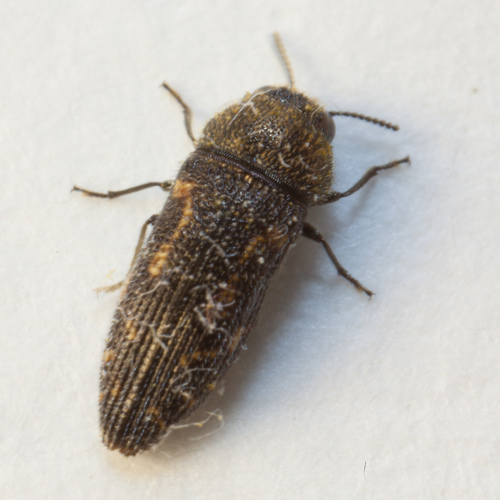
Acmaeodera tubulus, gemeinhin bekannt als ein flachköpfiger Hartholzbohrer, ist ein winziger und charismatischer metallisch glänzender Holzborkenkäfer, der in Nordamerika beheimatet ist. Diese Käfer sind leicht an ihren dunklen, zylindrischen Körpern zu erkennen, die mit markanten gelben oder orangefarbenen Flecken verziert sind. Erwachsene Tiere sind an warmen, sonnigen Frühlings- und Sommertagen sehr aktiv und besuchen häufig eine Vielzahl von Wildblumen, um sich von Pollen und Nektar zu ernähren. Während die Erwachsenen eine Diät aus süßen Blüten genießen, spielen ihre Larven eine wichtige ökologische Rolle als Zersetzer. Die Larven bohren sich in totes und verrottendes Holz verschiedener Hartholzbäume, wie Eichen und Hickorybäume, und helfen dabei, organisches Material abzubauen und wichtige Nährstoffe in den Waldboden zurückzuführen. Diese Art ist ein entzückender Fund für jeden Naturbeobachter, der sonnige Waldränder erkundet.
Lebensraum: Typischerweise in Laubwäldern, an Waldrändern und angrenzenden Feldern zu finden, wo Wildblumen und Hartholz-Wirtsbäume reichlich vorhanden sind.
Dieser winzige Käfer misst zwischen 0,5 und 0,8 Zentimetern in der Länge und weist eine robuste, zylindrische Körperform auf. Seine Rückenseite ist dunkel, metallisch bronzefarben oder schwarz, unterbrochen von einer Reihe kleiner, leuchtend gelber oder orangeroter Flecken, die über die Elytren (Flügeldecken) verstreut sind. Die Elytren sind entlang der Mittellinie verwachsen, wodurch sie sich während des Fluges nicht öffnen können. Sein Thorax und Kopf sind stark punktiert, was dem Käfer bei näherer Betrachtung ein strukturiertes, raues Aussehen verleiht.
Kategorie
InsektenSeltenheit
Common
Gefahr
1/5 · Sehr gering
Snaps
1
Erwachsene Tiere sind stark thermophil, was bedeutet, dass sie in den heißesten Teilen sonniger Tage am aktivsten sind, wenn andere Insekten Schatten suchen würden.
Da ihre Flügeldecken verwachsen sind, können sie diese zum Fliegen nicht öffnen; stattdessen schieben sie ihre Flugflügel seitlich aus ihrer Panzerung, was sie wie Miniatur-Kampfflugzeuge aussehen lässt.
Ihre Larven werden aufgrund des breiten, abgeflachten Thorax, der sie aussehen lässt, als hätten sie einen überdimensionalen Kopf, als Flachkopfbohrer bezeichnet.
Erwachsene Tiere ernähren sich hauptsächlich von Pollen und Nektar verschiedener Wildblumen, während Larven sich von totem Hartholz ernähren.
Altersunterschiede: Larven sind holzbohrende Detritivore, die sich von totem Hartholz ernähren, während erwachsene Tiere florivor sind und sich von Pollen und Nektar ernähren.
Für dieses Objekt sind noch keine Merkmal-Badges vergeben.
Noch keine Alternativnamen vorhanden.
Sammlungen für dieses Objekt erscheinen hier, wenn weitere Themen hinzugefügt werden.
Gefahr
1/5 · Sehr gering
Noch keine besonderen Sicherheitshinweise.
Der einfachste Weg, Acmaeodera Tubulus zu bestimmen, ist die Verwendung der Naturführer-App Snappit.
Erwachsene Tiere ernähren sich hauptsächlich von Pollen und Nektar verschiedener Wildblumen, während Larven sich von totem Hartholz ernähren.
Typischerweise in Laubwäldern, an Waldrändern und angrenzenden Feldern zu finden, wo Wildblumen und Hartholz-Wirtsbäume reichlich vorhanden sind.
Nahrungssuche
Zoome hinein, um Cluster aufzulösen und zu sehen, wo dieses Objekt fotografiert wurde.
Nimm die Entdeckung mit
Fotografiere deinen Fund mit Snappit, bestimme die Art und füge die Entdeckung deiner Sammlung hinzu.












.jpg&width=800)




